
Last week, onchain finance kept building toward a fuller financial stack. Institutions moved deeper into settlement, tokenized assets, and market infrastructure, while crypto-native players kept pushing product and execution forward. The pace stayed steady, but the shape of the market got sharper.
✔ Tokenized markets are moving toward real trading infrastructure
✔ Payment and settlement rails are getting institutional depth
✔ Apps are getting smarter as data and automation stack up
Ready for the signals? 🔎
🚨 Featured Story of the Week:
How Mastercard and Visa Are Expanding Geographically in Onchain Finance in 2026
Beyond Mastercard’s acquisition of BVNK - which grabbed massive headlines - another story is what both payment giants have been quietly building across markets. So far in 2026, Mastercard is doubling down on localized access through regional partners, while Visa is scaling cross-border payment flows through infrastructure. It’s two very different strategies for owning onchain finance.
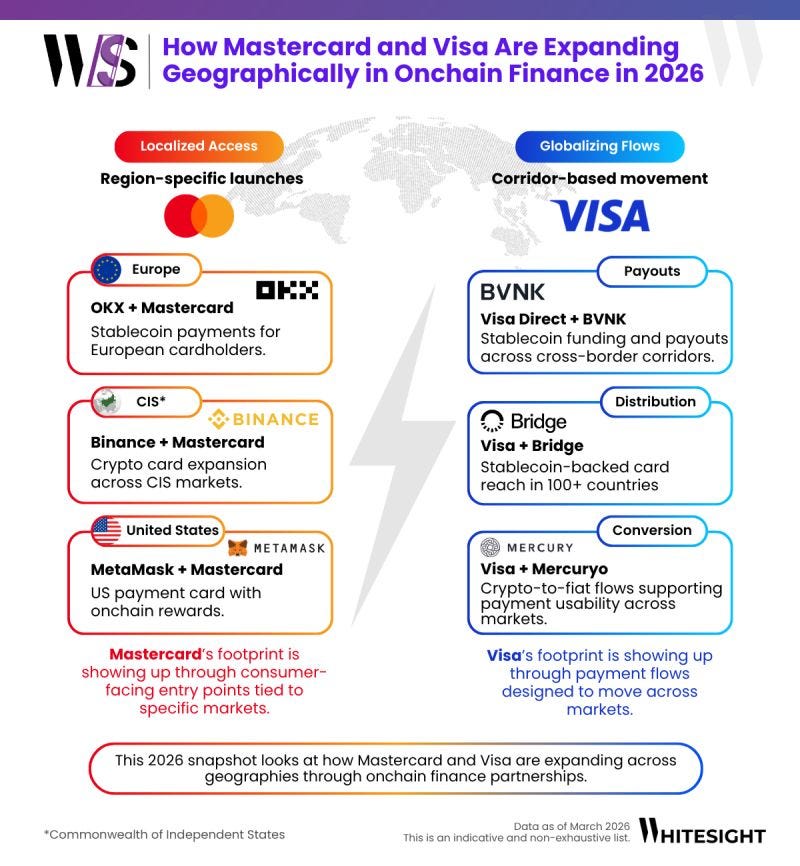
Breaking it down, the contrast shows up across four clear themes:
Localized Access: Mastercard is leaning into region-specific launches and local distribution.
Globalizing Flows: Visa is building rails designed to move value across corridors.
Consumer vs Rail: Mastercard is showing up closer to the user. Visa is showing up deeper in the payment stack.
Two Different Maps: Mastercard is building destinations. Visa is building highways.
Check out the full breakdown and join the conversation on LinkedIn here »»
🚀 Startup Spotlight: Startale
Startale is building the infrastructure layer for onchain finance, with products spanning blockchain networks, stablecoins, developer tooling, and consumer-facing apps. Its role is increasingly important because it is trying to connect tokenized assets, payments, and user activity into one more usable financial stack.

The company made news this week after raising $63 million in Series A funding backed by SBI Group and Sony Innovation Fund. Strategically, that matters because it gives Startale both capital and distribution across finance and consumer ecosystems, while signaling that the next phase of onchain finance will be shaped by infrastructure players that can bridge institutional rails, tokenized assets, and mainstream user products.
Building something interesting in onchain finance? We’d love to feature you next- drop us a note at hello@whitesight.net 👋
Pledge your access to fintech analysis and exclusive insights ⚡
📢 We’re always seeking innovative voices in fintech to be our next guest feature!
With a community of 2100+ fintech enthusiasts, we’d love to amplify your insights. Reach out to us for features, sponsorships, or collaborations!
Get Unlimited Access to Strategy Playbooks of Fintech Pioneers with WhiteSight Radar! 🚀

Unlock a treasure trove of fintech intel with a WhiteSight Radar subscription. See further with exclusive reports, industry trend breakdowns, and expert analysis on everything from Embedded Finance and Digital Banking to Open Finance and beyond.
Become a member and steer your business course with actionable intelligence on the winning strategies of leading companies like Apple, Stripe, Starling Bank, OakNorth Bank, Banco Inter, and Toast that propels your business to the forefront of fintech. (PLUS! More in our premium content pipeline - Amazon, Nubank, Grab, Wise, Shopify, Affirm, Mercado Libre… the list goes on!)
Supercharge your Fintech IQ with WhiteSight Radar, putting expert fintech intel at your fingertips! 🧭
Edition 9: The week onchain finance turned from momentum into market structure »
Last Week’s Top Onchain Tea!♨️
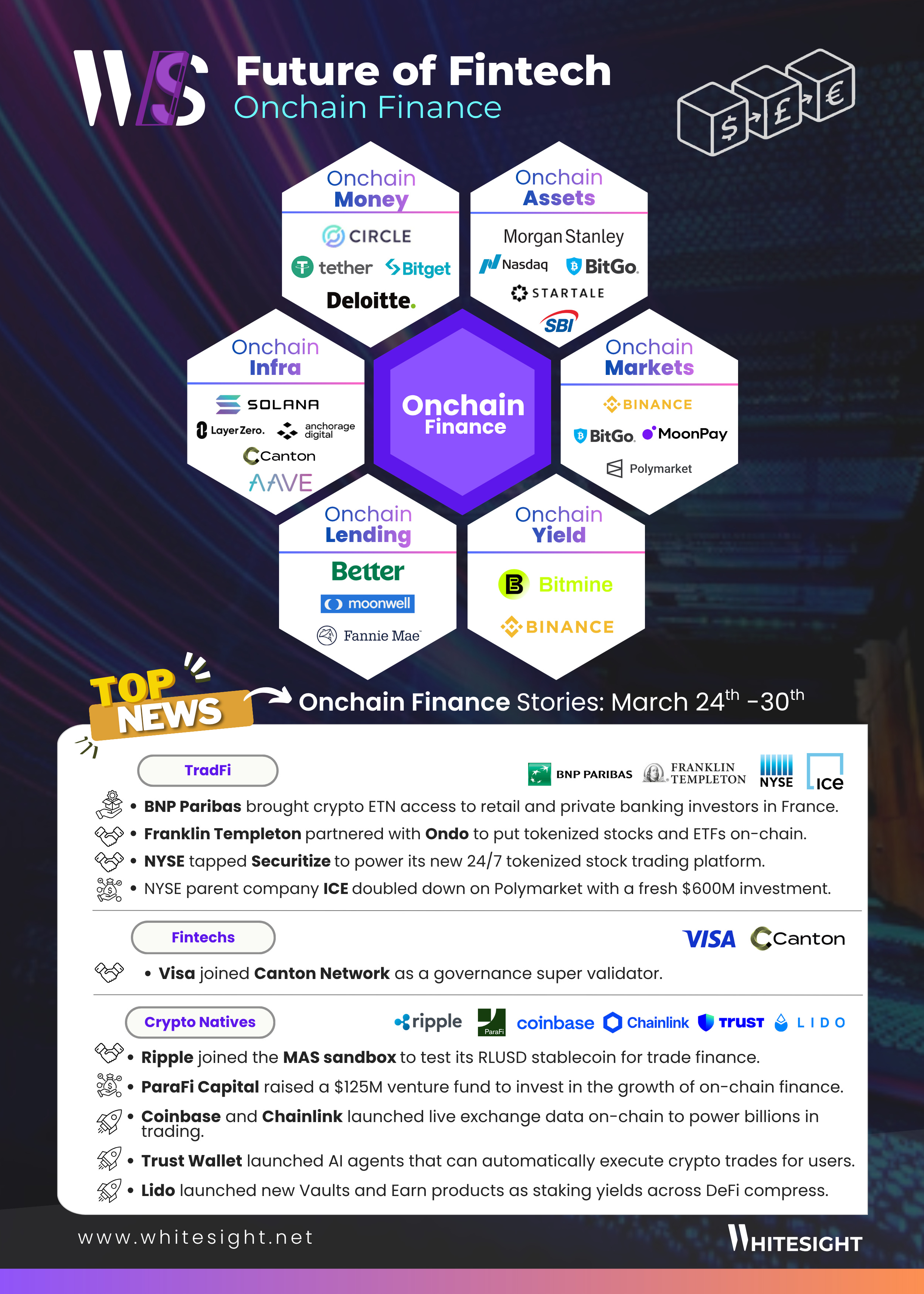
Capital is getting allocated
↳ BNP Paribas opened crypto ETN access to retail and private banking investors in France
↳ ParaFi Capital raised a $125M fund to back the next wave of onchain financePublic markets go onchain
↳ Franklin Templeton partnered with Ondo to bring tokenized stocks and ETFs onchain
↳ NYSE tapped Securitize to power its new 24/7 tokenized stock trading platformThe market stack is changing
↳ ICE doubled down on Polymarket with a fresh $600M investment
↳ Coinbase and Chainlink launched live exchange data onchain to power trading at scaleRegulated rails are deepening
↳ Visa joined Canton Network as a governance super validator
↳ Ripple entered the MAS sandbox to test RLUSD for trade financeCrypto apps are leveling up
↳ Trust Wallet launched AI agents that can automatically execute crypto trades
↳ Lido rolled out Vaults and Earn products as DeFi staking yields keep compressing
Now, for the ‘byte’-sized onchain buzz -
Onchain Money 💸
Stablecoins are moving closer to everyday payment flows.
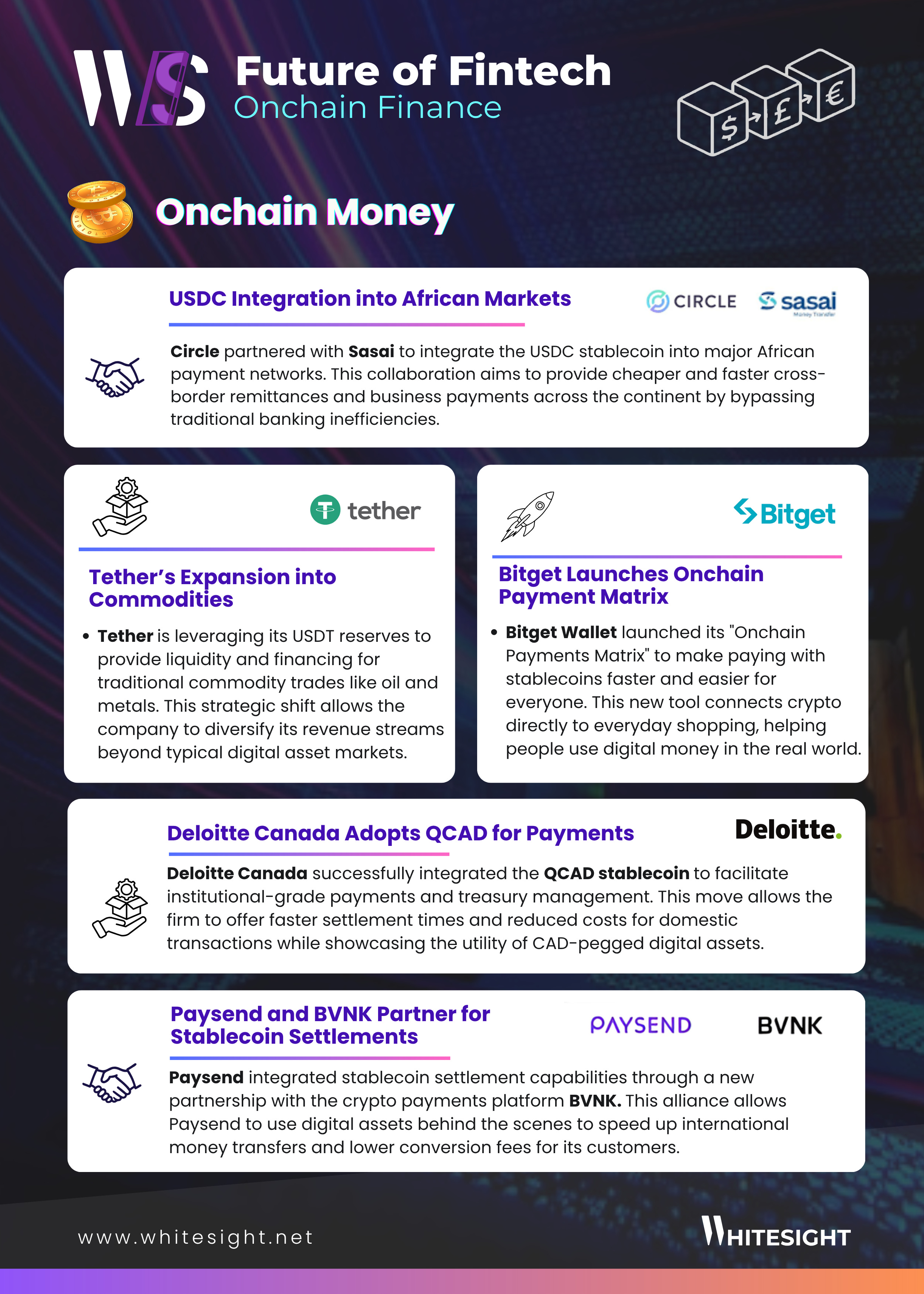
The News: Paysend partnered with BVNK to add stablecoin settlement across its consumer and enterprise payments stack. It gives the company an always-on settlement rail alongside its existing fiat network.
Implication: Stablecoins are being plugged into real payment infrastructure, not treated as a side experiment.
The News: Tether-backed USDT0 went live on Tempo, a payments-first Layer 1 focused on omnichain USDT liquidity. The move extends stablecoin liquidity deeper into payments-native infrastructure.
Implication: Payment chains are starting to compete on stablecoin liquidity and usability, not only blockspace.
Onchain Assets 🏛️
Tokenized assets are expanding from standard wrappers into broader market exposure and new trading formats.
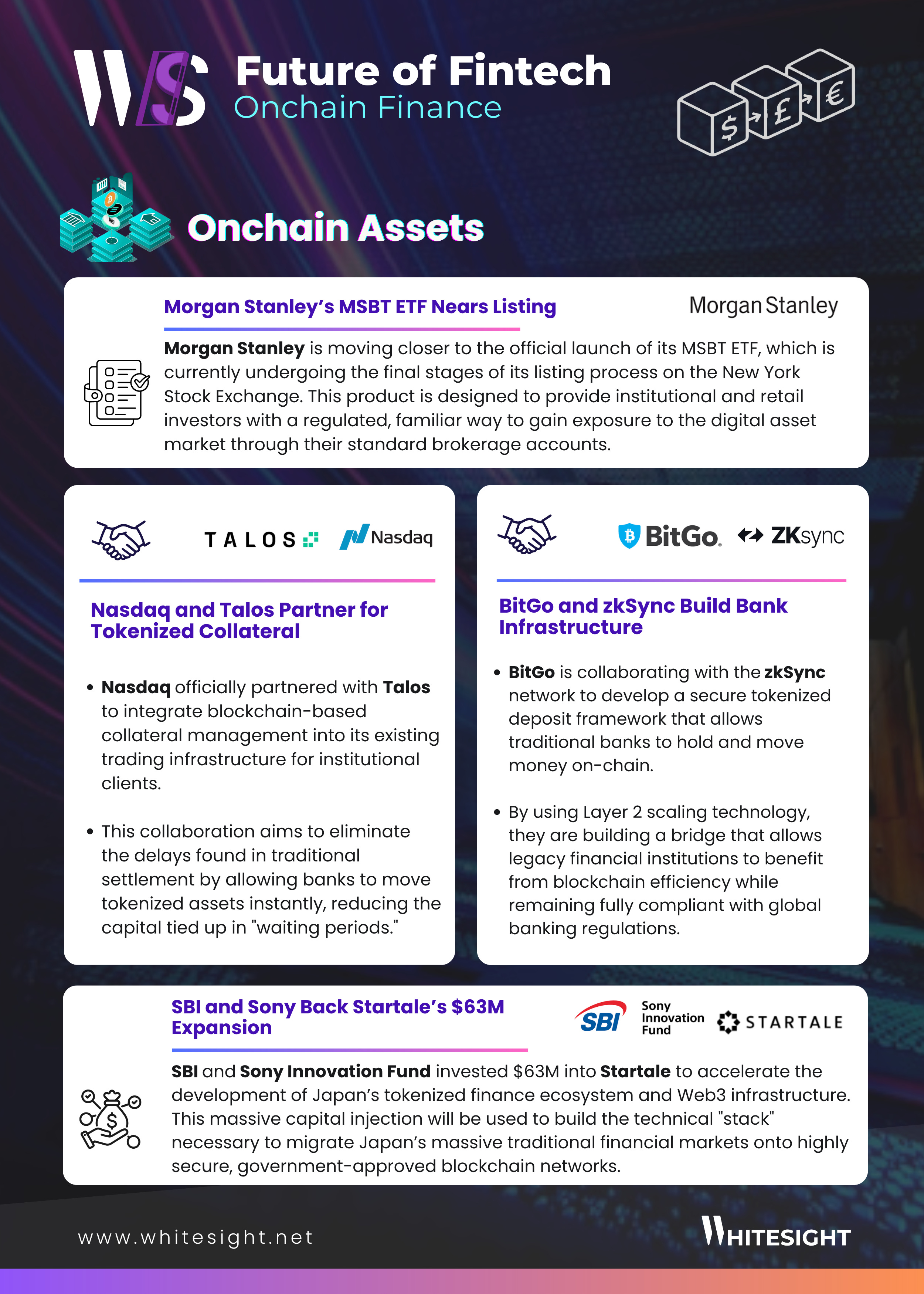
The News: xStocks partnered with Fundrise to bring the newly public Fundrise Innovation Fund onchain through a tokenized asset called VCXx. That gives onchain investors another route into late-stage private market exposure.
Implication: The onchain asset menu is widening beyond Treasury products and blue-chip equities.
The News: Wintermute launched 24/7 oil trading through OTC-style CFDs rather than the perp model popularized by exchanges like Hyperliquid. It is a more institutional trading format wrapped in crypto-native market hours.
Implication: Onchain-style markets are starting to absorb real-world commodities through structures that look more like traditional finance.
Onchain Markets 📈
Onchain market infrastructure is scaling fast, but regulation is arriving just as quickly.
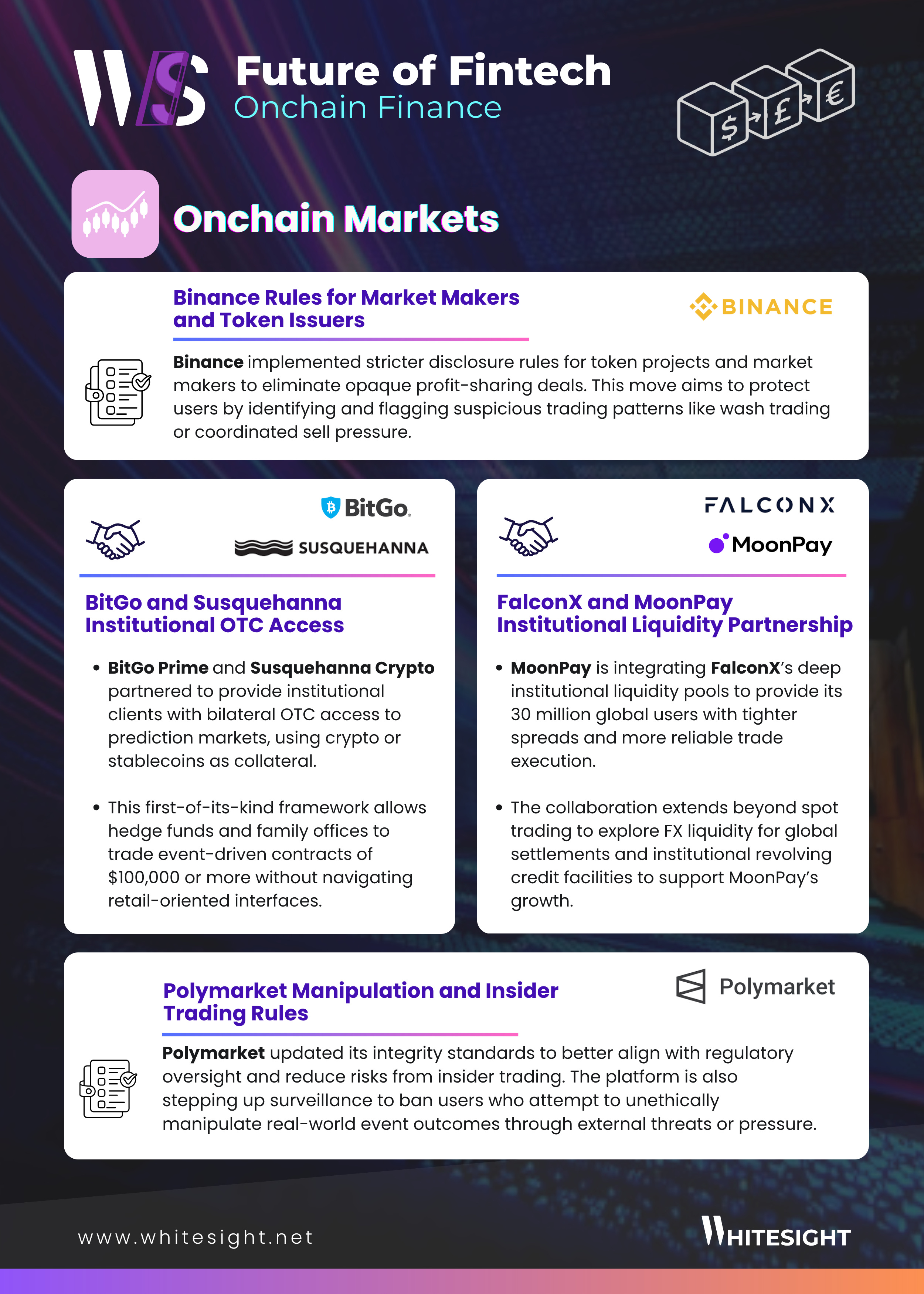
The News: Kalshi won approval to launch margin trading for professional clients, opening the door to more capital-efficient prediction market activity. At the same time, Washington sued the company, arguing its event contracts violate state gambling law.
Implication: Prediction markets are maturing into a bigger financial category, but the legal perimeter is still being fought in real time.
The News: Bitpanda launched Vision Chain, a blockchain designed to connect EU banks and fintechs with tokenized assets under a more regulated framework. The pitch is clear: move tokenization out of pilots and into compliant financial plumbing.
Implication: The next market winners in Europe may be the platforms that make tokenized assets easy for regulated institutions to plug into.
Onchain Infra 🛠️
Infrastructure is getting more institutional, with trust and verification moving closer to the core stack.
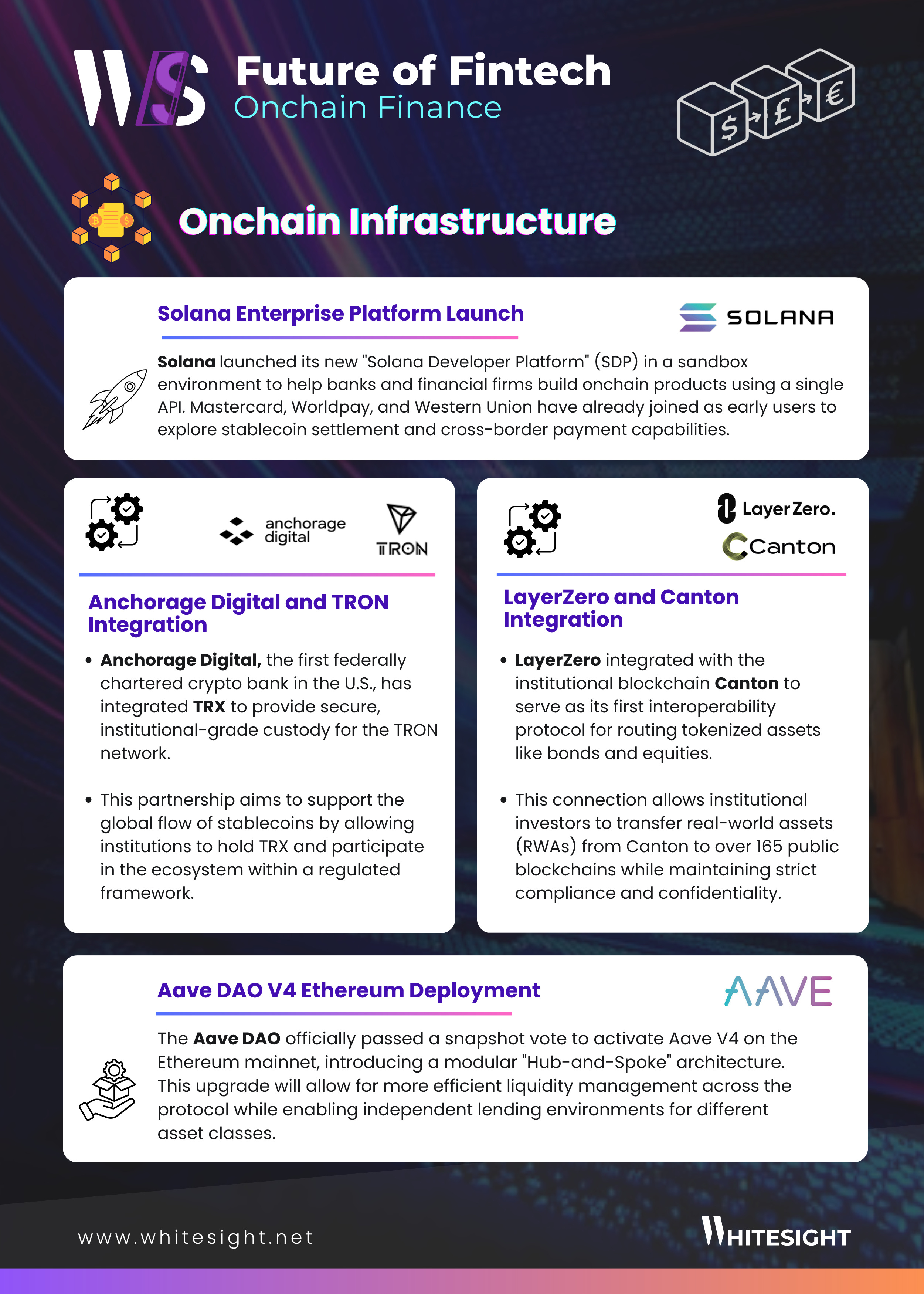
The News: Gems Trade adopted Fireblocks’ MPC infrastructure for digital asset custody, aiming to reduce single-key risk and tighten operational security across its exchange. The move targets the kind of infrastructure weaknesses institutions increasingly screen for.
Implication: Better custody is no longer a nice-to-have; it is a prerequisite for serious flow.
The News: BlackRock’s tokenized BUIDL fund added Chronicle as a verification layer, bringing onchain visibility into the fund’s assets, valuation, and custody setup. It adds another trust layer around one of the biggest tokenized Treasury products in market.
Implication: Tokenized funds are moving beyond issuance into proof, transparency, and auditability.
Onchain Yield 🌾
Yield products are getting easier to access and more packaged for mainstream distribution.
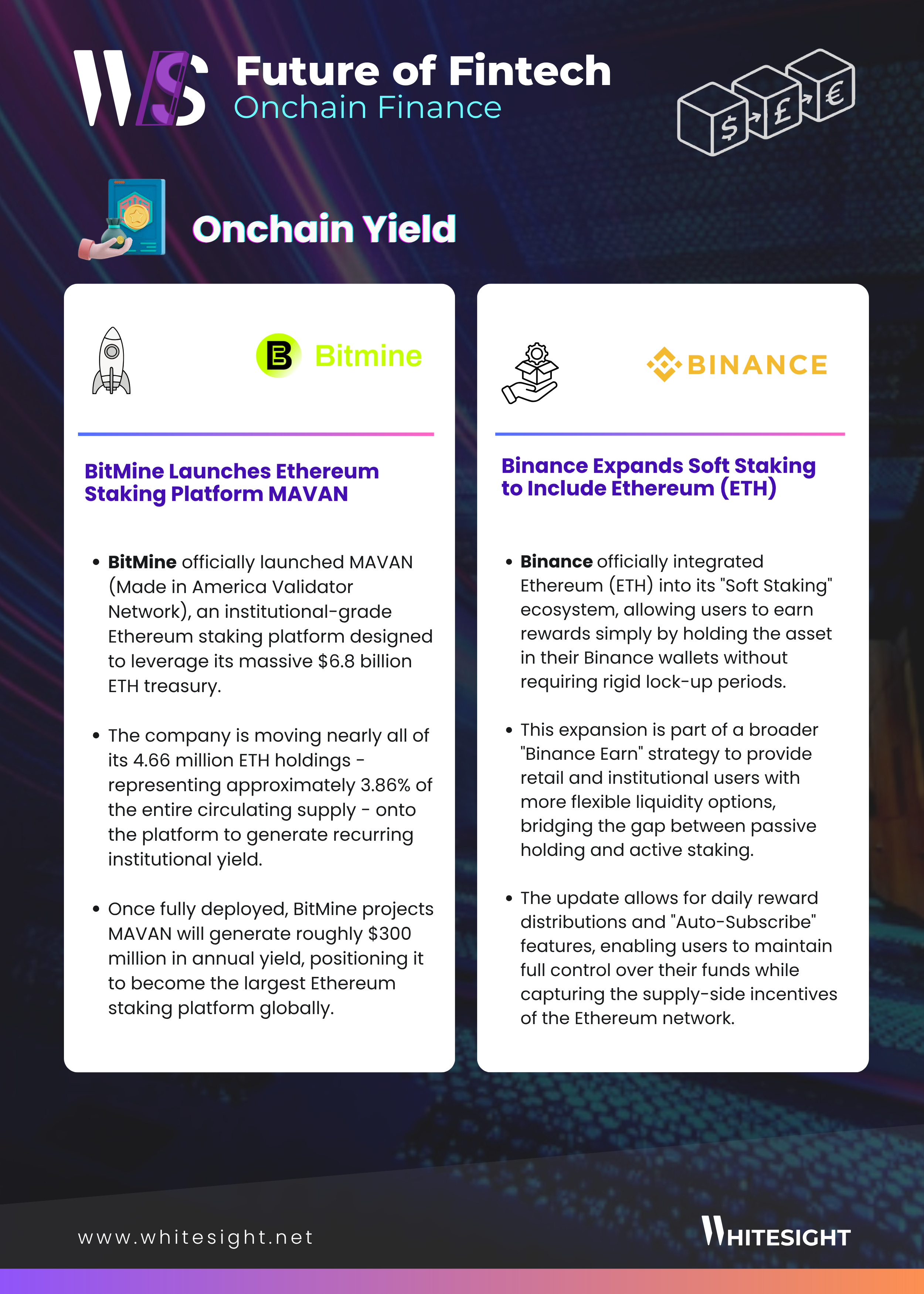
The News: BitMine launched MAVAN, its Ethereum staking platform, with ambitions to generate up to $300 million in annual yield. The product turns staking into a larger-scale institutional yield business.
Implication: Staking is being framed less like passive crypto income and more like a structured yield vertical.
The News: Binance expanded Soft Staking to include ETH, letting users earn staking rewards directly from spot balances while keeping assets liquid for trading and withdrawals. It lowers the friction to participate in Ethereum yield.
Implication: The next growth leg for onchain yield is convenience, not complexity.
Onchain Lending 🏠
Lending is stretching in two directions at once: deeper real-world integration and fresh governance risk.
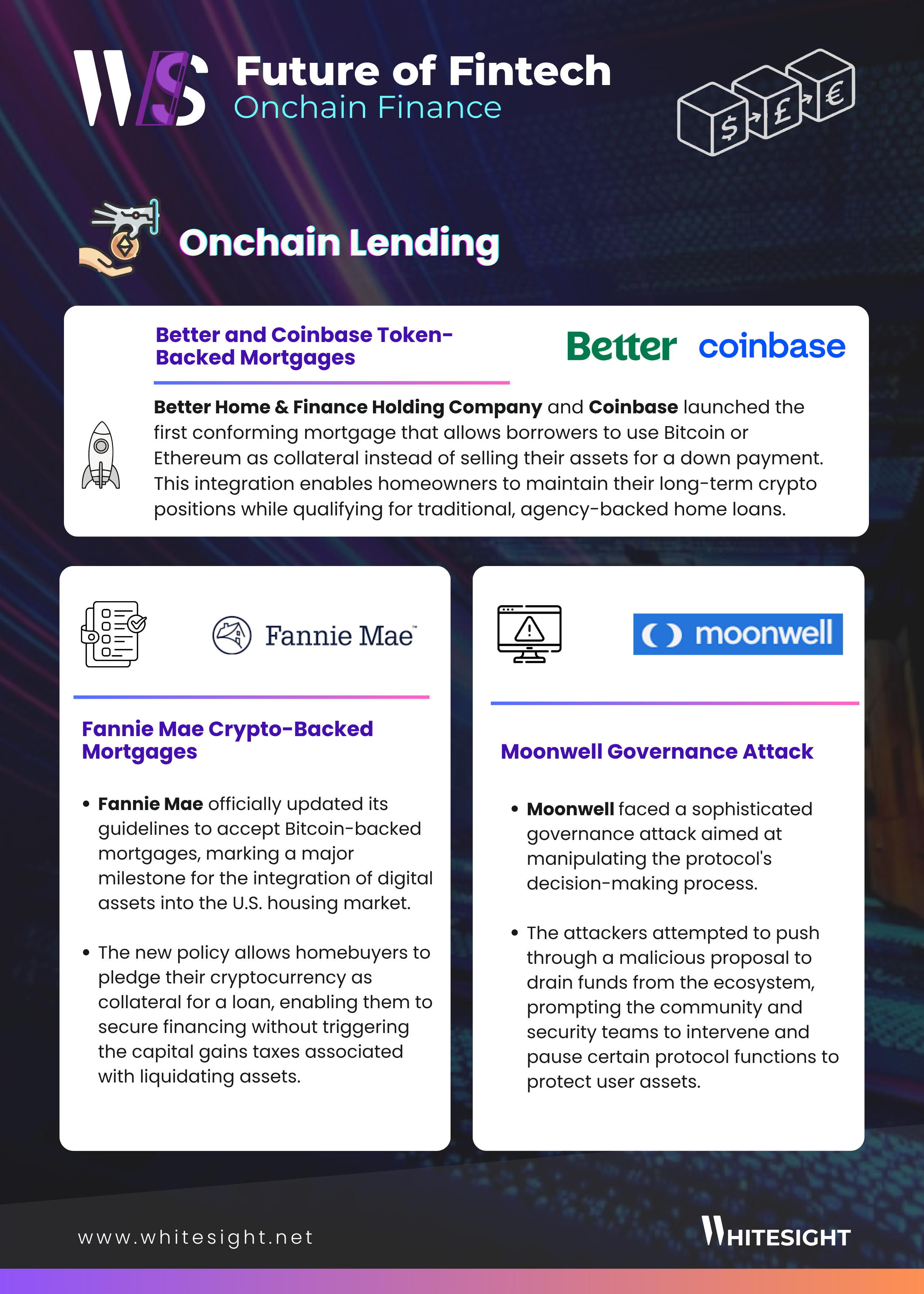
The News: Fannie Mae partnered with Better and Coinbase to accept crypto-backed mortgages, allowing borrowers to use bitcoin or USDC-backed loans to fund a down payment on a Fannie-backed home loan. It brings crypto collateral into a major housing finance channel for the first time.
Implication: Crypto collateral is starting to enter mainstream credit markets, even if the structure is still more expensive than cash.
The News: DeFi lender Moonwell faced a governance attack after an attacker reportedly spent about $1,800 on tokens to push a proposal that could put over $1 million at risk. The episode exposed how cheaply protocol control can still be contested.
Implication: Onchain lending growth still depends on governance hardening, not just TVL expansion.
And that’s a wrap 👋
We hope you enjoyed this edition of the Onchain Finance!
If you’re someone who likes to read think pieces, you will likely love our monthly blog, Fintersections, where our team members analyse the convergence of fintech with the world.
And lastly, to stay updated on everything fintech and web3, follow us on LinkedIn and Twitter, and don’t be shy to show some ❤️
Thanks for reading Future of FinTech Newsletter! Subscribe for free to receive new posts and support my work.