
This was the kind of week where onchain finance stopped asking for attention and simply started advancing. The moves were bigger, clearer, and more connected: money rails widened, tokenized assets gained ground, and the machinery for yield and risk kept getting stronger. Bit by bit, the architecture of the next financial system is locking into place.
✔ Stablecoins are scaling into everyday finance.
✔ Tokenized assets are gaining real market rails.
✔ Onchain infra is turning capital into code.
Ready for the signals? 🔎
🚨 Featured Story of the Week:
Wall Street Goes Onchain: Nasdaq vs NYSE
How are the biggest exchange operators starting to position for tokenized markets? This week’s featured story looks at how Nasdaq and NYSE are approaching the onchain transition from very different angles. While both are moving toward tokenized securities, onchain settlement, and new market infrastructure, their strategies reveal two very different visions for how Wall Street may evolve.
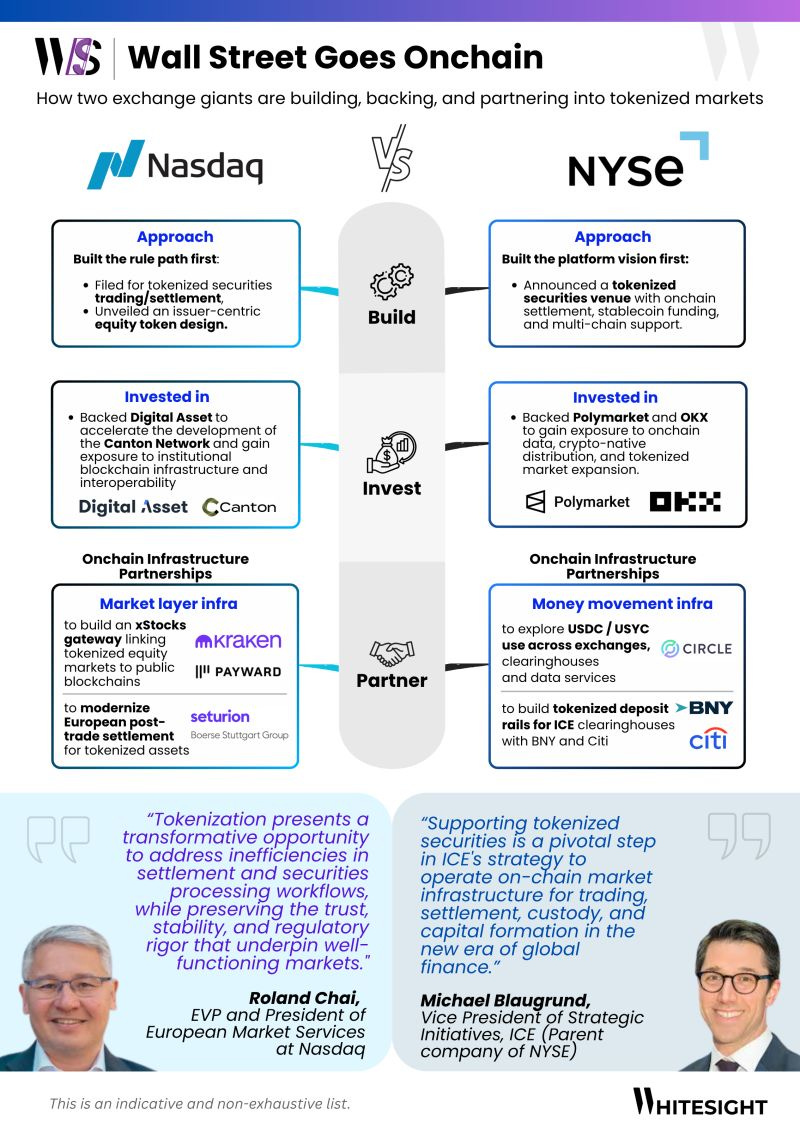
Breaking it down, the contrast shows up across four clear themes:
The Market Structure Play: Nasdaq appears to be building from the rule path first, focusing on tokenized securities design, issuer compatibility, and regulated market structure.
The Ecosystem Expansion Play: NYSE looks to be taking a broader route, stretching into tokenized venues, stablecoin flows, tokenized deposits, and crypto-native distribution.
The Partnership Layer: Both are partnering aggressively, but in different directions - Nasdaq toward equity gateways and post-trade modernization, NYSE toward money movement rails and institutional onchain infrastructure.
The Bigger Signal: This is not one exchange copying the other. It is two giants heading toward the same destination through very different blueprints for the future of finance.
Check out the full breakdown and join the conversation on LinkedIn here »»
🚀 Startup Spotlight: Brahma
Brahma is building the infrastructure layer that helps apps and institutions move capital, automate transactions, and manage onchain accounts more seamlessly. By combining smart accounts, execution, and settlement tooling, Brahma is making crypto systems easier to use in real financial workflows.

The company made headlines this week after being acquired by Polymarket, which is using the deal to deepen its product stack and tighten the infrastructure behind its fast-growing prediction market platform. The acquisition signals that Brahma’s tooling is becoming strategically important as major crypto apps race to own more of their backend rails.
Building something interesting in onchain finance? We’d love to feature you next- drop us a note at hello@whitesight.net 👋
Pledge your access to fintech analysis and exclusive insights ⚡
📢 We’re always seeking innovative voices in fintech to be our next guest feature!
With a community of 2100+ fintech enthusiasts, we’d love to amplify your insights. Reach out to us for features, sponsorships, or collaborations!
Get Unlimited Access to Strategy Playbooks of Fintech Pioneers with WhiteSight Radar! 🚀

Unlock a treasure trove of fintech intel with a WhiteSight Radar subscription. See further with exclusive reports, industry trend breakdowns, and expert analysis on everything from Embedded Finance and Digital Banking to Open Finance and beyond.
Become a member and steer your business course with actionable intelligence on the winning strategies of leading companies like Apple, Stripe, Starling Bank, OakNorth Bank, Banco Inter, and Toast that propels your business to the forefront of fintech. (PLUS! More in our premium content pipeline - Amazon, Nubank, Grab, Wise, Shopify, Affirm, Mercado Libre… the list goes on!)
Supercharge your Fintech IQ with WhiteSight Radar, putting expert fintech intel at your fingertips! 🧭
Edition 8: The week onchain finance turned from momentum into market structure »
Last Week’s Top Onchain Tea!♨️
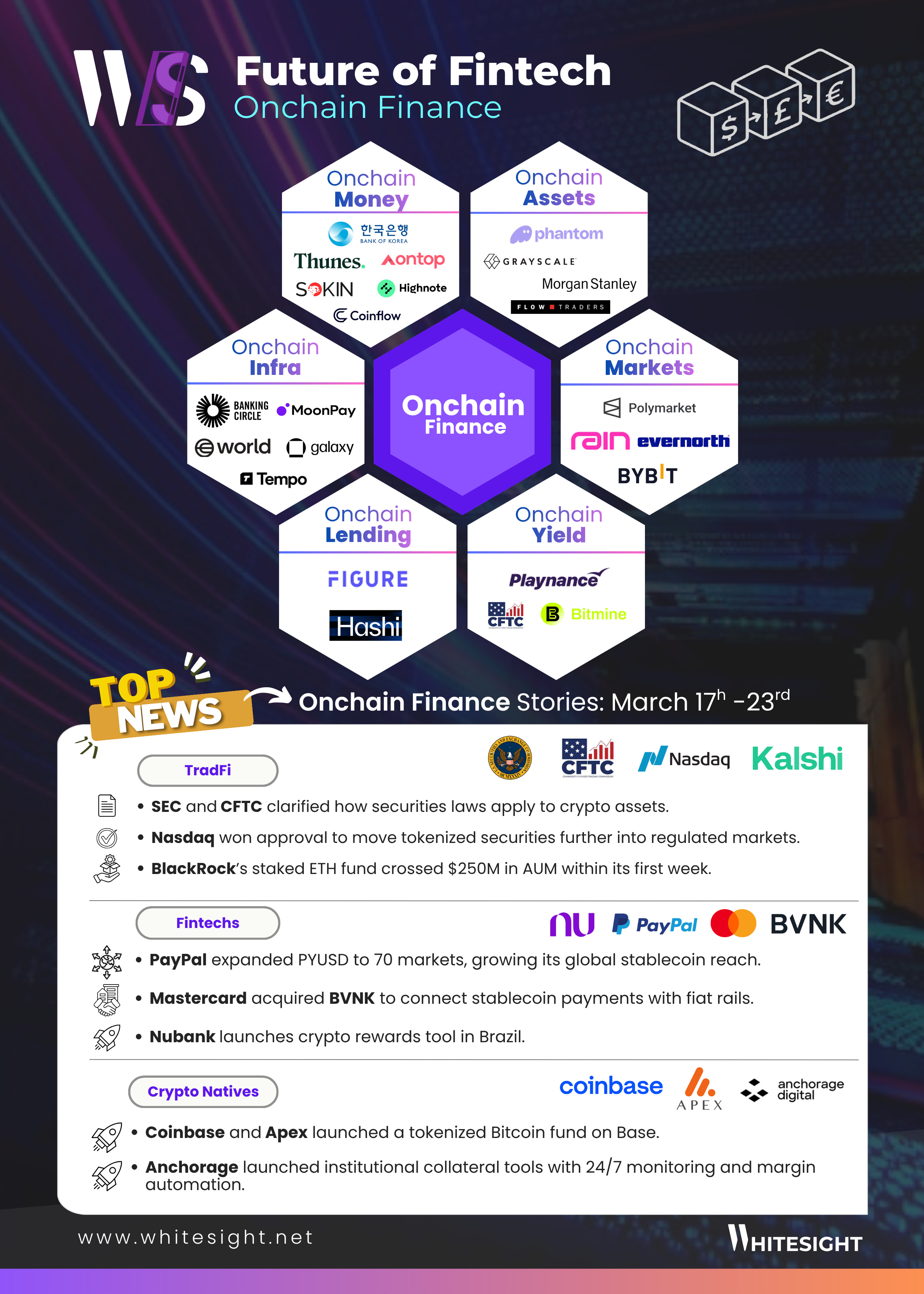
Washington is drawing the lines while Wall Street moves onchain.
↳ SEC and CFTC clarified how US securities laws apply to crypto assets, giving tokenized finance a clearer regulatory framework.
↳ Nasdaq won SEC approval for tokenized securities, pushing regulated equities further onto onchain rails.Stablecoins are becoming a real global payments product.
↳ PayPal expanded PYUSD to 70 markets globally, deepening its cross-border stablecoin reach.
↳ Mastercard moved to acquire BVNK, tightening the link between onchain payments and fiat settlement rails.Crypto is slipping into everyday finance through familiar consumer apps.
↳ Nubank launched a crypto rewards tool in Brazil, bringing digital assets into a mainstream banking experience.
↳ Coinbase Asset Management and Apex Group launched a tokenized Bitcoin yield fund, making crypto investment products easier to access through structured formats.The next institutional wave is about earning yield and managing risk onchain.
↳ BlackRock’s staked Ether fund crossed $250M AUM in its first week, showing strong demand for yield-bearing crypto exposure.
↳ Anchorage Digital launched collateral management services on Atlas, adding more risk and financing infrastructure for institutional crypto markets.
Now, for the ‘byte’-sized onchain buzz -
Onchain Money 💸
Crypto payment rails are getting more local, embedded, and consumer-facing.
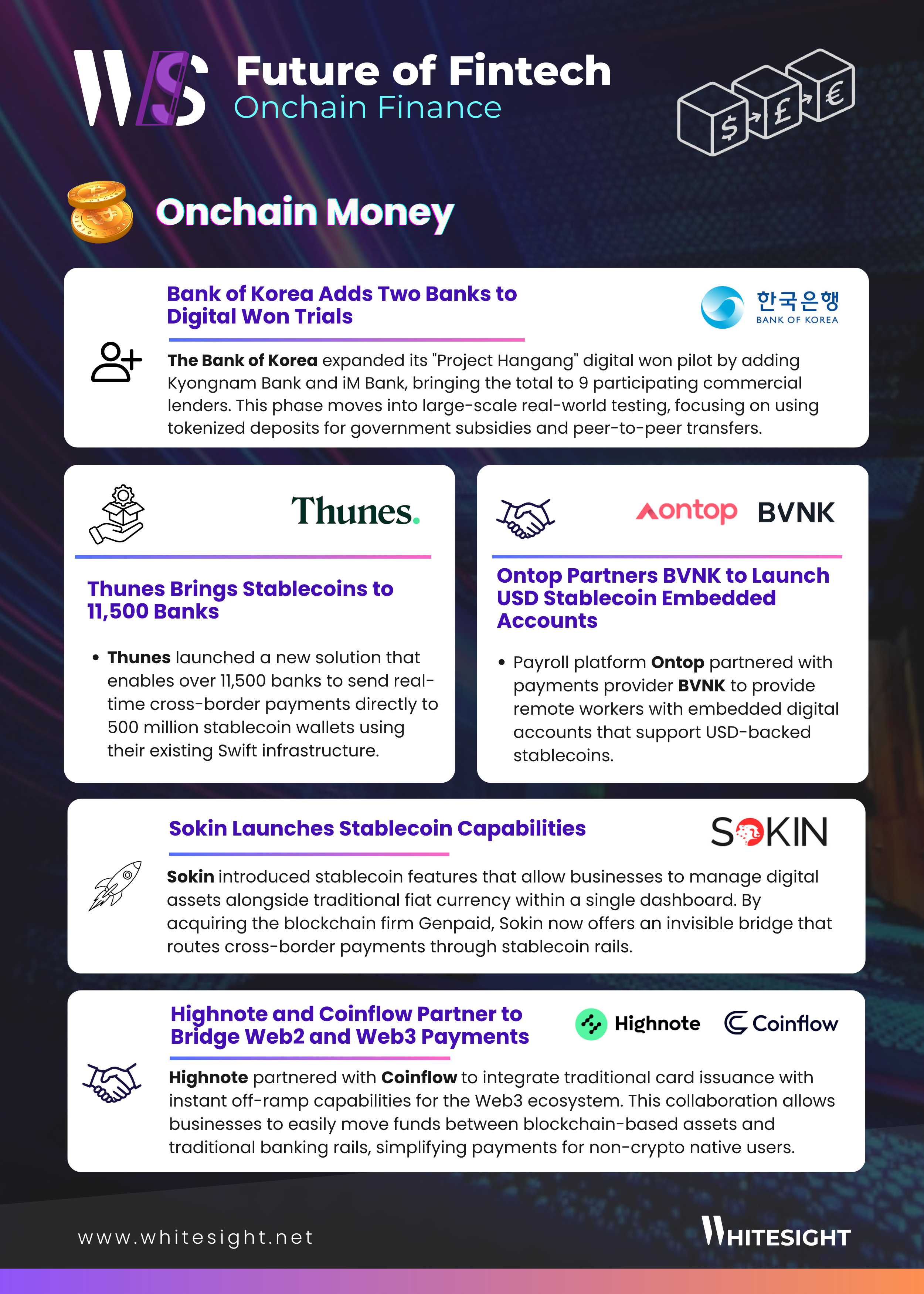
The News: Nubank launched a crypto rewards tool in Brazil, adding another on-ramp between digital assets and everyday retail users.
Implication: Banks and fintech apps are making crypto feel more like a native product, not a separate investing app.
The News: Bitget Wallet launched bank transfer support in Bangladesh, enabling stablecoin payouts into local financial rails.
Implication: Stablecoins get more useful when users can move seamlessly between onchain dollars and domestic bank systems.
The News: Bybit Pay brought QR-based crypto payments to Bolivia through Yape-style merchant flows.
Implication: Crypto payments work best when they plug into familiar checkout behavior instead of asking users to change habits.
Onchain Assets 🏗️
Tokenized market access is starting to move through regulated rails, not crypto workarounds.
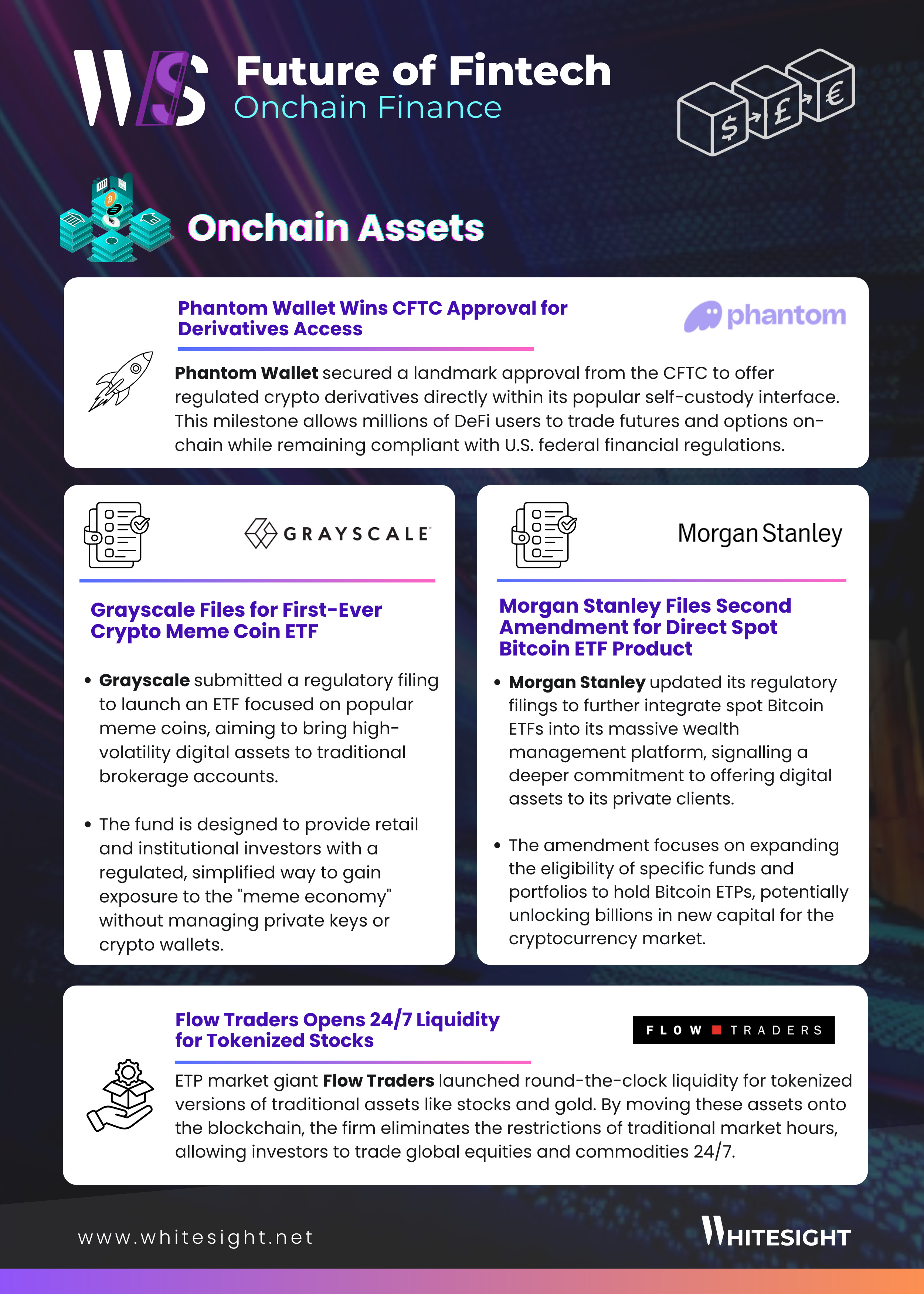
The News: The CFTC cleared a pilot that lets registered derivatives firms use crypto assets like Bitcoin, Ether, and certain stablecoins as collateral under supervised conditions.
Implication: This is a step toward making onchain assets usable inside real financial plumbing, where crypto is not just held but posted, margined, and recognized inside regulated markets.
The News: Phantom received CFTC no-action relief that lets its wallet connect users to regulated derivatives access without being treated like a traditional broker, as long as it stays non-custodial.
Implication: Wallets are inching closer to becoming front ends for regulated financial products, which could make tokenized exposure much easier to distribute at scale.
Onchain Market
Public-market crypto exposure is getting more ambitious, even as exchange listings stay fragile.
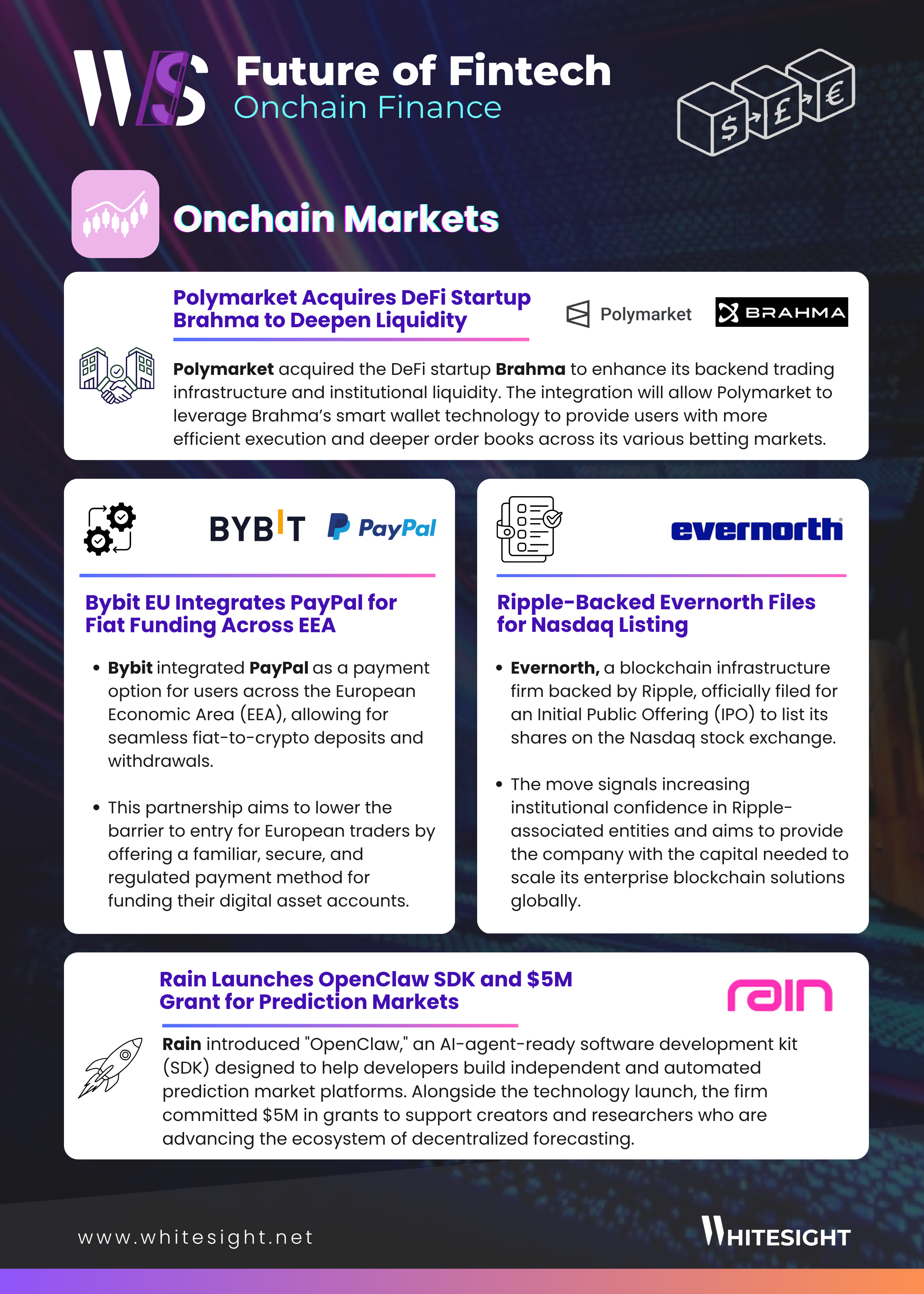
The News: Ripple-backed Evernorth filed for a Nasdaq debut through a SPAC merger, aiming to become a listed XRP treasury company with more than $1 billion in gross proceeds.
Implication: Public investors are being offered more direct balance-sheet exposure to crypto assets, which could turn token treasuries into a new listed market category.
The News: Kraken reportedly froze its multibillion-dollar IPO plan despite earlier filing progress, choosing to wait for a better market window.
Implication: Crypto market infrastructure is maturing, but public listings still depend on timing, sentiment, and how much volatility equity investors are willing to absorb.
Onchain Infra
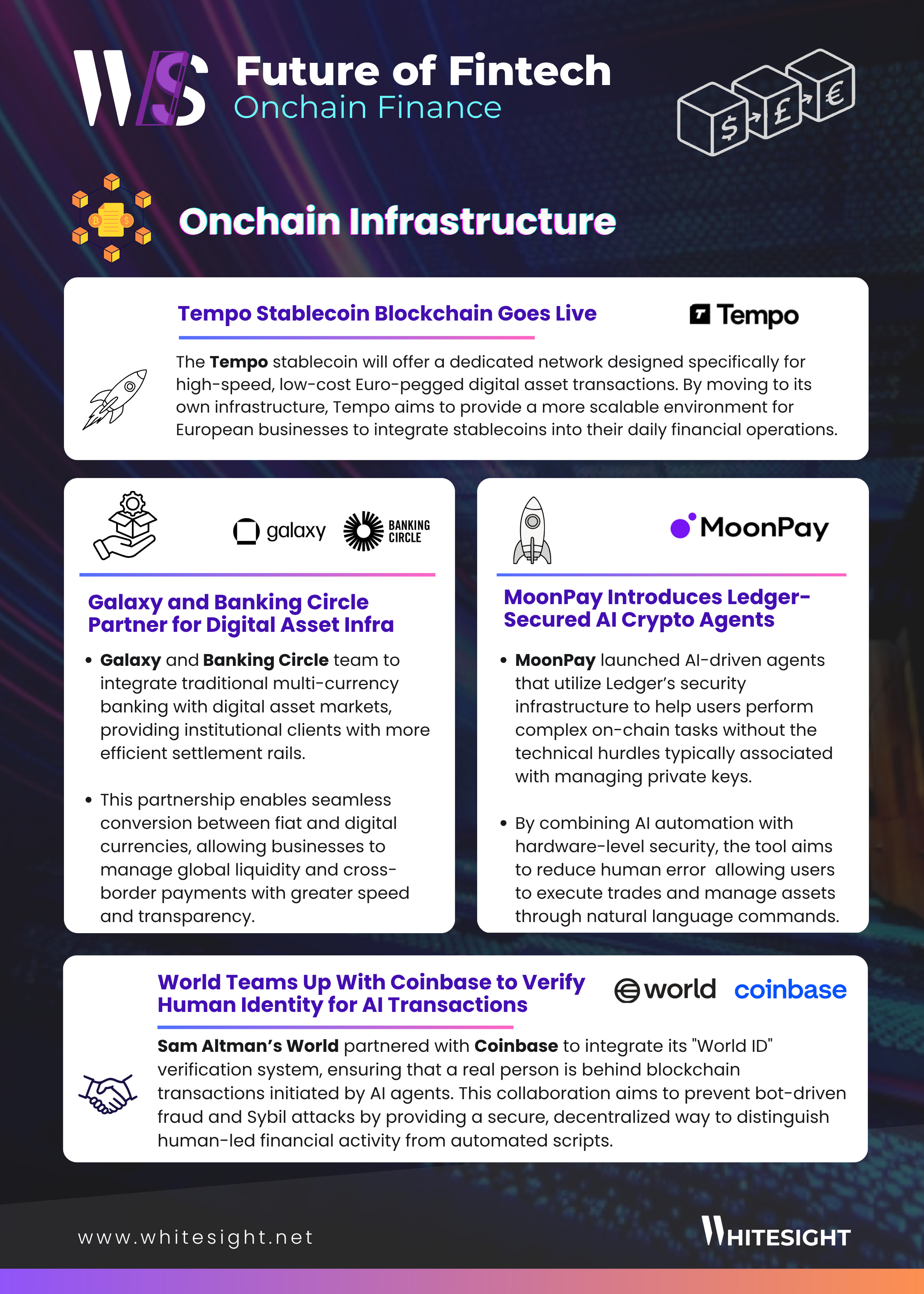
The new infra race is about stablecoin throughput and safe machine payments.
The News: Tempo, backed by Stripe and Paradigm, launched its stablecoin-focused blockchain mainnet with support for AI-agent transactions and machine payment flows.
Implication: Payments infrastructure is being rebuilt around stablecoins and automation, which points to a future where software can move money as easily as it calls an API.
The News: MoonPay Agents introduced a Ledger-secured AI agent setup, letting automated agents transact while keeping signing tied to hardware-wallet security.
Implication: Agentic finance only scales if users trust the security model, and hardware-backed signing is an early answer to that trust gap.
Onchain Yield
Yield is splitting into two tracks: fast-moving token incentives and clearer regulated staking rules.
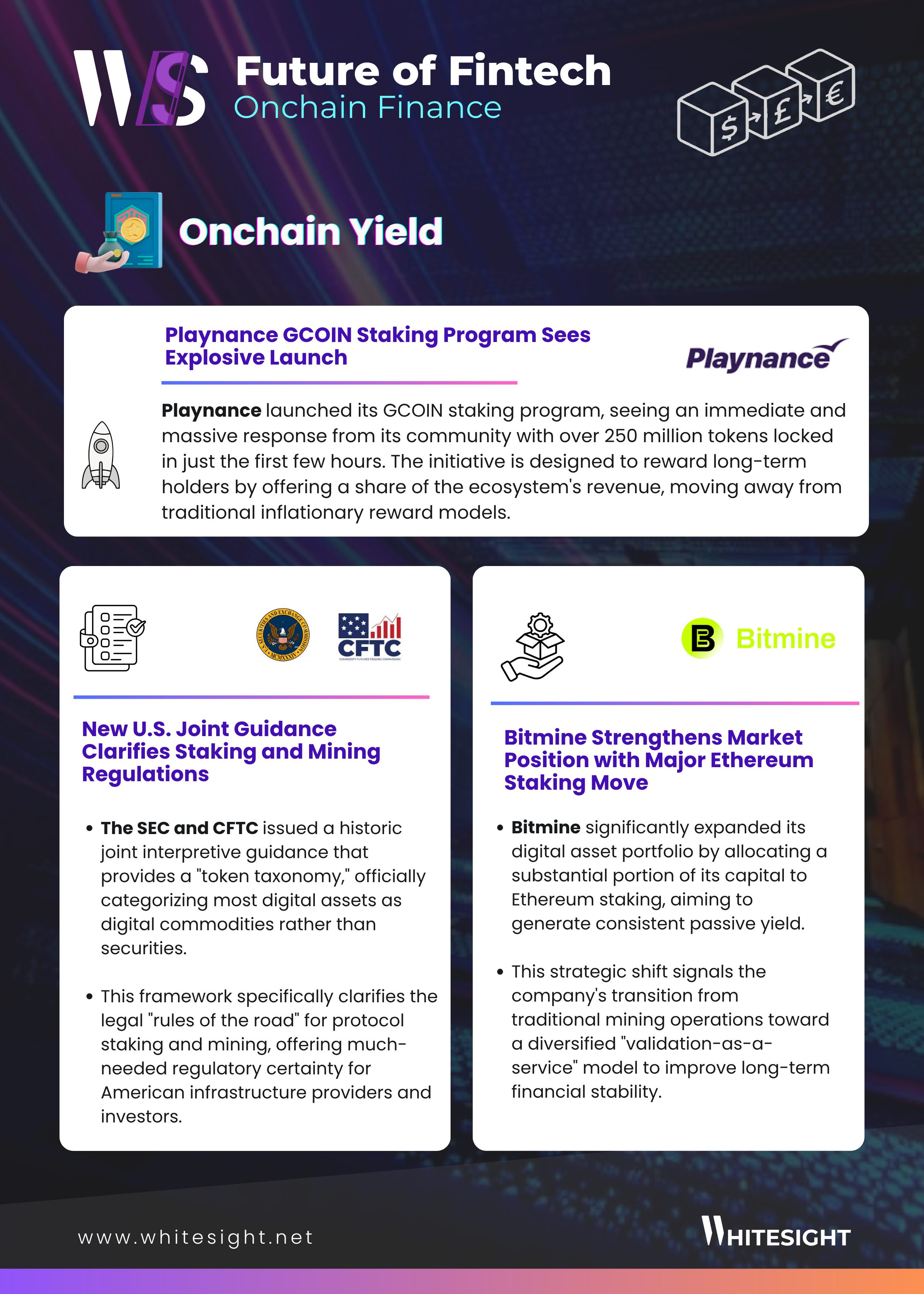
The News: Playnance launched GCOIN staking and said users locked more than 250 million tokens within hours of going live.
Implication: Retail appetite for onchain yield is still strong, especially when token communities can turn staking into an immediate liquidity and loyalty event.
The News: New U.S. CFTC guidance clarified how staking and mining are treated under federal crypto rules, giving the sector a more defined regulatory footing.
Implication: Clearer rules make staking easier to package into mainstream products, which is what institutions need before treating onchain yield as a real allocation bucket.
Onchain Lending
Credit is moving onchain from both directions: real-world loan pools and Bitcoin-backed finance.
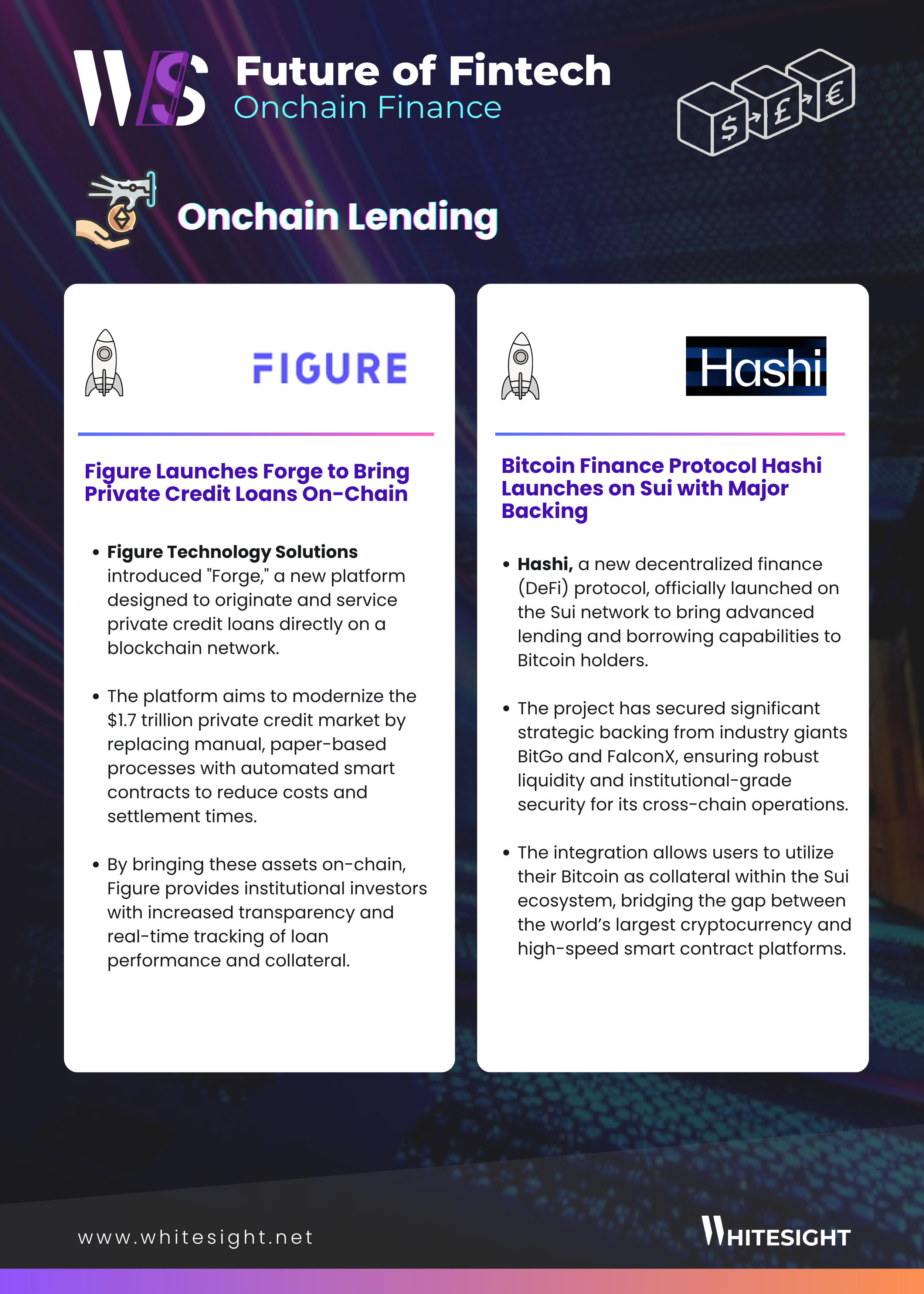
The News: Figure launched Forge to bring private credit loans onchain, starting with tokenized exposure to real loan pools through its Provenance-based infrastructure.
Implication: Private credit becomes more liquid and easier to distribute when loan exposure can be wrapped into standardized onchain instruments.
The News: Hashi launched on Sui with backing from BitGo and FalconX, aiming to let Bitcoin holders borrow, lend, and put BTC to work inside a finance protocol.
Implication: Bitcoin is being pushed beyond passive holding into productive credit markets, which could unlock a much larger collateral base for onchain lending.
And that’s a wrap 👋
We hope you enjoyed this edition of the Onchain Finance!
If you’re someone who likes to read think pieces, you will likely love our monthly blog, Fintersections, where our team members analyse the convergence of fintech with the world.
And lastly, to stay updated on everything fintech and web3, follow us on LinkedIn and Twitter, and don’t be shy to show some ❤️
Thanks for reading Future of FinTech Newsletter! Subscribe for free to receive new posts and support my work.