
The past weeks marked a clear transition from isolated agent experiments to coordinated infrastructure buildout across finance.
Across payments, crypto, banking, infrastructure, and AI platforms, agents moved beyond pilots and into live financial environments. Use cases spanned agent-led payments, automated workflows, AI-assisted insights, and real-time compliance across financial systems.
✔ Card networks advanced authenticated agent-led payments.
✔ Crypto infrastructure providers enabled AI-native wallets and autonomous blockchain execution.
✔ Banks and digital wallets leveraged AI for internal operations and customer assistance.
Ready for the agentic signals that defined the final two weeks of March? 🔍⚡
🚨 Featured Story of the Week:
Visa Extends Card Payments Into Stripe and Tempo’s Machine Payments Protocol
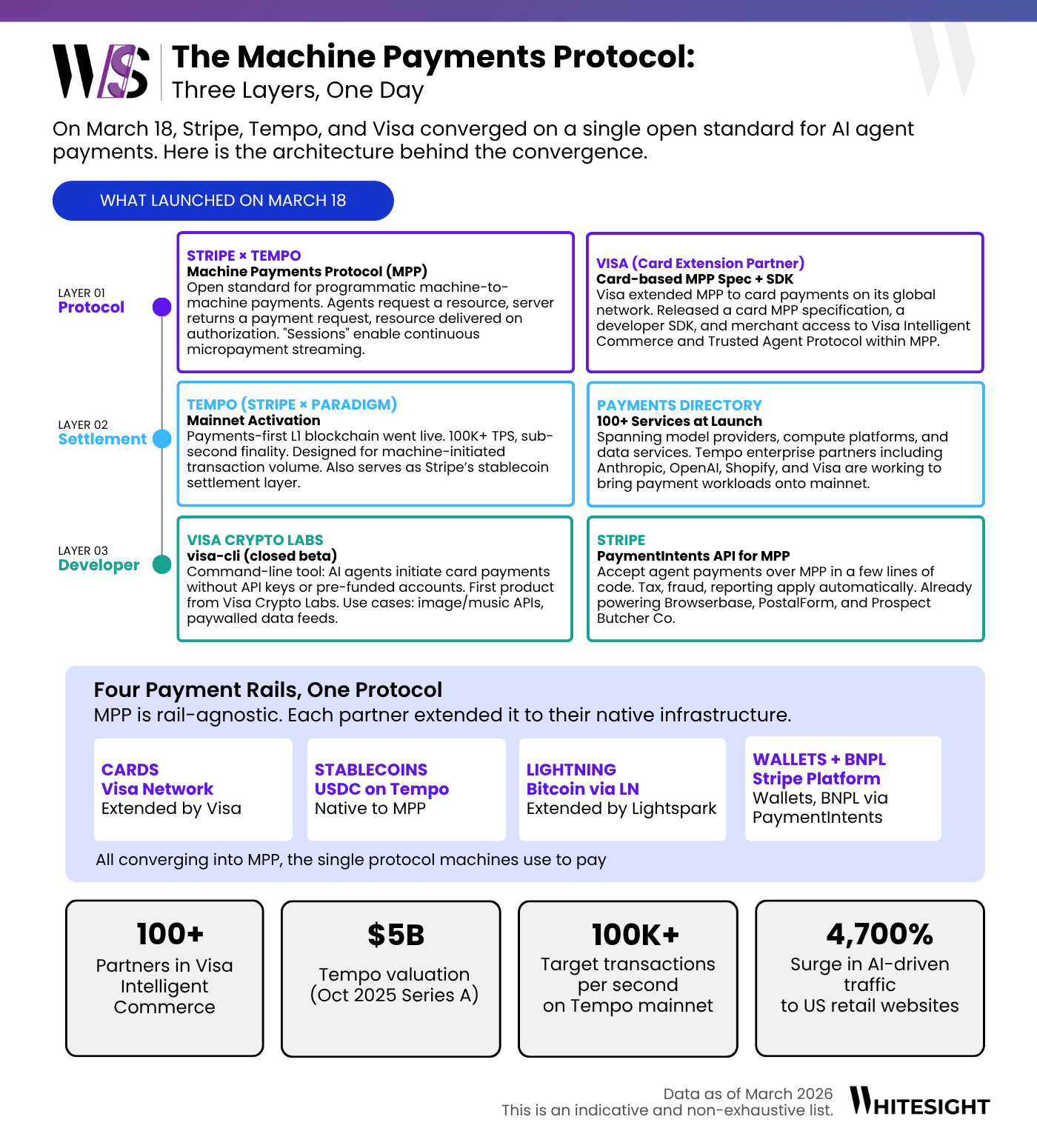
On March 18, Stripe and Tempo launched the Machine Payments Protocol (MPP). This open standard defines how AI agents request, authorize, and settle payments with services programmatically. Tempo, the payments-focused blockchain incubated by Stripe and Paradigm, activated its mainnet on the same day. Visa, a design partner on MPP, simultaneously extended the protocol to support card-based payments across its global network.
Visa’s contributions include a card-based MPP specification, an SDK for developers building card transactions within MPP, and merchant access to Visa Intelligent Commerce and the Trusted Agent Protocol within MPP flows. On the same day, Visa Crypto Labs shipped Visa Command Line Commerce (CLI), a command-line tool that lets AI agents initiate card payments without API keys or pre-funded accounts.
The result: AI agents can now transact through a single open protocol spanning stablecoins, cards, wallets, and Bitcoin Lightning. Visa brought card rails. Stripe extended MPP to cards, wallets, and buy-now-pay-later through Shared Payment Tokens. Lightspark extended MPP to Bitcoin Lightning. At launch, over 100 services were already listed in Tempo’s payments directory, from model providers to compute platforms.
Why it matters
Visa’s agentic commerce strategy is now clearly readable. It mirrors Visa’s broader onchain playbook in 2026. On the stablecoin side, Visa expanded Bridge-linked cards to 100+ countries. It deepened Visa Direct integrations with Mercuryo and BVNK. It reached $4.6 billion in annualized stablecoin settlement on Ethereum. Each move routes new value flows through the existing Visa infrastructure. The agentic commerce approach follows the same logic: make sure the new payment flows settle on Visa rails.
Visa Intelligent Commerce now counts 100+ partners globally. Over 30 are building within the VIC sandbox. More than 20 agent enablers are integrating directly. AI-driven traffic to US retail websites surged over 4,700% in the past year. 47% of US shoppers already use AI tools for at least one shopping task.
Breaking down the strategy:
Three infrastructure layers came together on a single day.
The protocol layer. MPP replaces ad hoc billing integrations with a single machine-readable standard. When an agent requests a resource from any HTTP endpoint, the server returns a payment request. Upon authorization, the resource is delivered instantly. MPP introduces “sessions,” a primitive that lets agents authorize a spending limit upfront and stream micropayments continuously. This is what makes sub-cent transactions viable for machine-to-machine commerce.
The settlement layer. Tempo’s mainnet launched with public RPC endpoints and targets 100,000+ TPS with sub-second finality. Those numbers seem excessive for consumer checkout. They start to make sense when the buyers are machines executing thousands of microtransactions per second. Design partners include Visa, Mastercard, Deutsche Bank, Standard Chartered, Revolut, Nubank, Shopify, OpenAI, Anthropic, Ramp, and DoorDash.
The developer layer. Visa-cli puts card payments directly in the developer’s terminal. Target use cases include on-demand payments for image generation APIs, music generation endpoints, and paywalled data feeds. Stripe’s PaymentIntents API now accepts MPP payments in a few lines of code. Both tools collapse the distance between building an agent and giving it the ability to spend.
What does it signal?
Cards and stablecoins are converging inside a single protocol. MPP accepts both. USDC on Tempo. Cards via Visa. Lightning via Lightspark. Fiat via Stripe’s PaymentIntents. The rail distinction is dissolving at the protocol level.
Tempo is doing double duty. The blockchain Stripe built for stablecoin settlement is now also the native settlement layer for machine payments. Stripe’s stablecoin stack and its agentic commerce stack share the same foundation.
The standards race is intensifying. MPP joins a growing field alongside Coinbase’s x402, Google’s AP2, OpenAI’s Agentic Commerce Protocol, Klarna’s Agentic Product Protocol, Mastercard’s Verifiable Intent, and Circuit & Chisel’s Agent Transaction Protocol.
If the future of commerce is machines paying machines, someone still has to guarantee that the payment clears. Visa just made sure its rails run inside the protocol where those machines transact.
Curious about how payment processors are architecting for the agentic era? Our Adyen deep dive maps the full stack.
Thanks for reading Future of FinTech - Agentic AI Newsletter! Subscribe for free to receive new posts and support our work.
Thanks for reading Future of FinTech Newsletter! Subscribe for free to receive new posts and support our work.
🚀 Startup Spotlight: Skyfire
This edition, we're spotlighting Skyfire, a San Francisco-based payments infrastructure company building the financial identity and wallet layer for AI agents. It gives every agent a unique digital wallet, a verifiable identity, and the ability to make and receive payments autonomously, without credit cards, bank accounts, or human intervention at the point of transaction.

Skyfire has raised $9.5 million in seed funding. The initial $8.5 million round in August 2024 was backed by Neuberger Berman, Brevan Howard Digital, DRW, Inception Capital, Circle, Gemini, Draper Associates, and Ripple. Coinbase Ventures and a16z’s Crypto Startup Accelerator (CSX) joined in October 2024, bringing the total to $9.5 million.
The company is already live inside Visa’s Intelligent Commerce closed beta. Under the hood, Skyfire converts deposited US dollars into USDC stablecoins, held in agent-specific wallets. Businesses set per-agent and per-transaction spending limits. If an agent attempts to overspend, Skyfire flags the transaction for human review. The platform collects 2–3% on every transaction and is building verification services as a second revenue stream.
Got something cool brewing in agentic finance? We’d love to feature you next- drop us a note at hello@whitesight.net 👋
Pledge your access to fintech analysis and exclusive insights ⚡
What’s on the fintech menu today?
🏁 Agentic Highlights: Biggest moves across agentic payments, agentic banking, and agentic commerce
🧩 ‘Byte’ Buzz: Agentic Finance updates, sorted by segment
🔗 Link Up: A curated set of reads worth your time
Sip on bite-sized agentic updates - fresh, sharp, and distilled to keep you ahead in just minutes. Subscribe now! 📨
📢 We’re always seeking innovative voices in fintech to be our next guest feature!
With a community of 2100+ fintech enthusiasts, we’d love to amplify your insights. Reach out to us for features, sponsorships, or collaborations!
Get Unlimited Access to Strategy Playbooks of Fintech Pioneers with WhiteSight Radar! 🚀

Unlock a treasure trove of fintech intel with a WhiteSight Radar subscription. See further with exclusive reports, industry trend breakdowns, and expert analysis on everything from Embedded Finance and Digital Banking to Open Finance and beyond.
Become a member and steer your business course with actionable intelligence on the winning strategies of leading companies like Apple, Stripe, Starling Bank, OakNorth Bank, Banco Inter, and Toast that propels your business to the forefront of fintech. (PLUS! More in our premium content pipeline - Amazon, Nubank, Grab, Wise, Shopify, Affirm, Mercado Libre… the list goes on!)
Supercharge your Fintech IQ with WhiteSight Radar, putting expert fintech intel at your fingertips! 🧭
Edition 5 brings you the agentic finance stories that shaped how agents shaped the finance and fintech industry in the first two weeks of March.
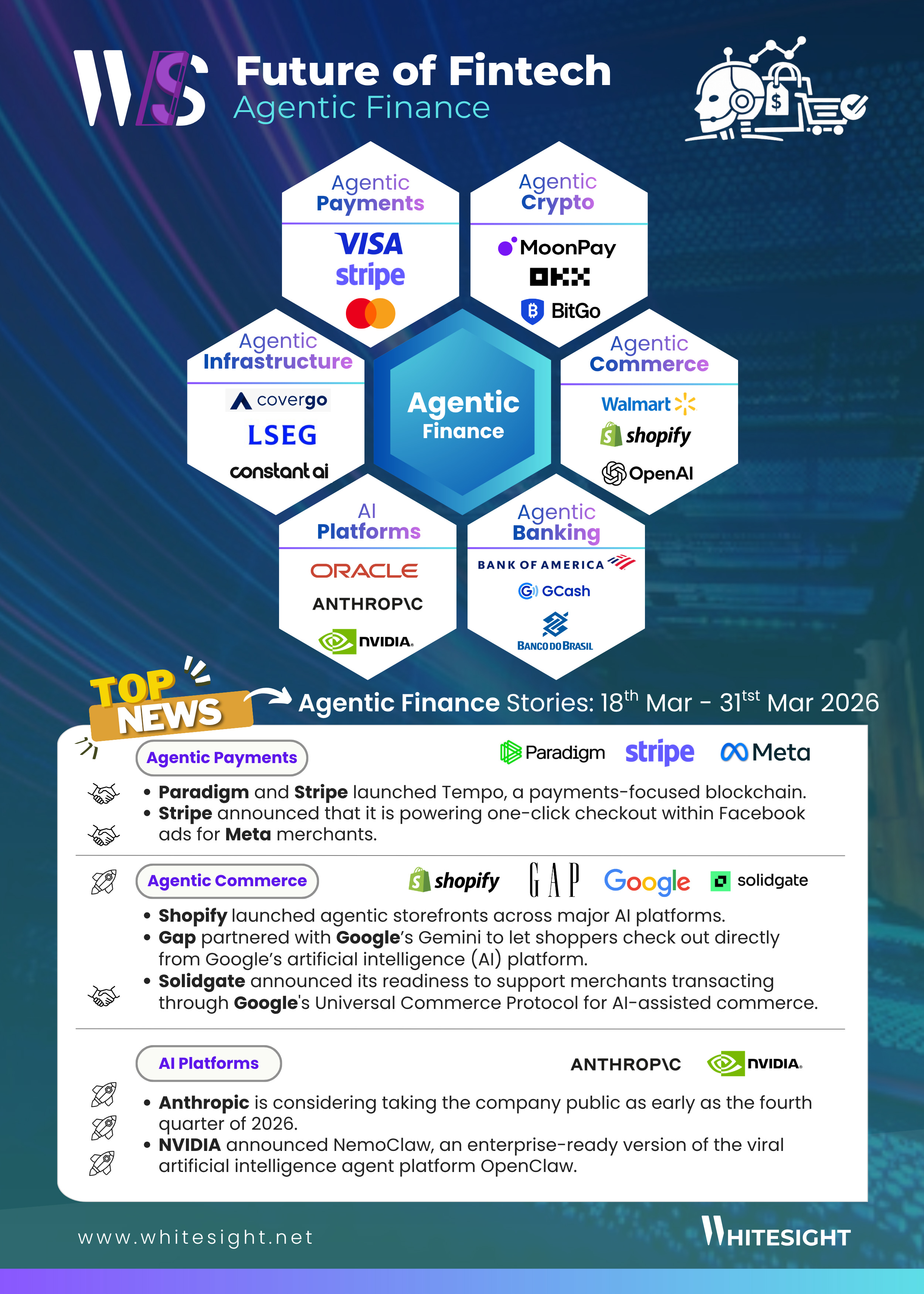
March’s Top Agentic Tea!♨️
Agentic Payments
⤷ Paradigm teamed up with Stripe to introduce Tempo, a blockchain designed specifically for payment use cases.
⤷ Stripe revealed it is enabling one-click checkout experiences within Facebook ads for merchants on Meta’s platform.
Agentic Commerce
⤷ Shopify rolled out AI-driven storefront capabilities across leading AI ecosystems to support agent-led shopping experiences.
⤷ Gap collaborated with Google to allow customers to complete purchases directly within Gemini.
⤷ Solidgate confirmed support for merchants leveraging Google’s Universal Commerce Protocol for AI-enabled transaction flows.
AI Platform Updates
⤷ Anthropic announced that it is exploring an initial public offering, potentially targeting a listing by late 2026.
⤷ NVIDIA launched NemoClaw, an enterprise-focused version of its OpenClaw AI agent platform for business applications.
Agentic payments scaled further as card networks moved from pilots to live, multi-market AI-driven transaction execution.
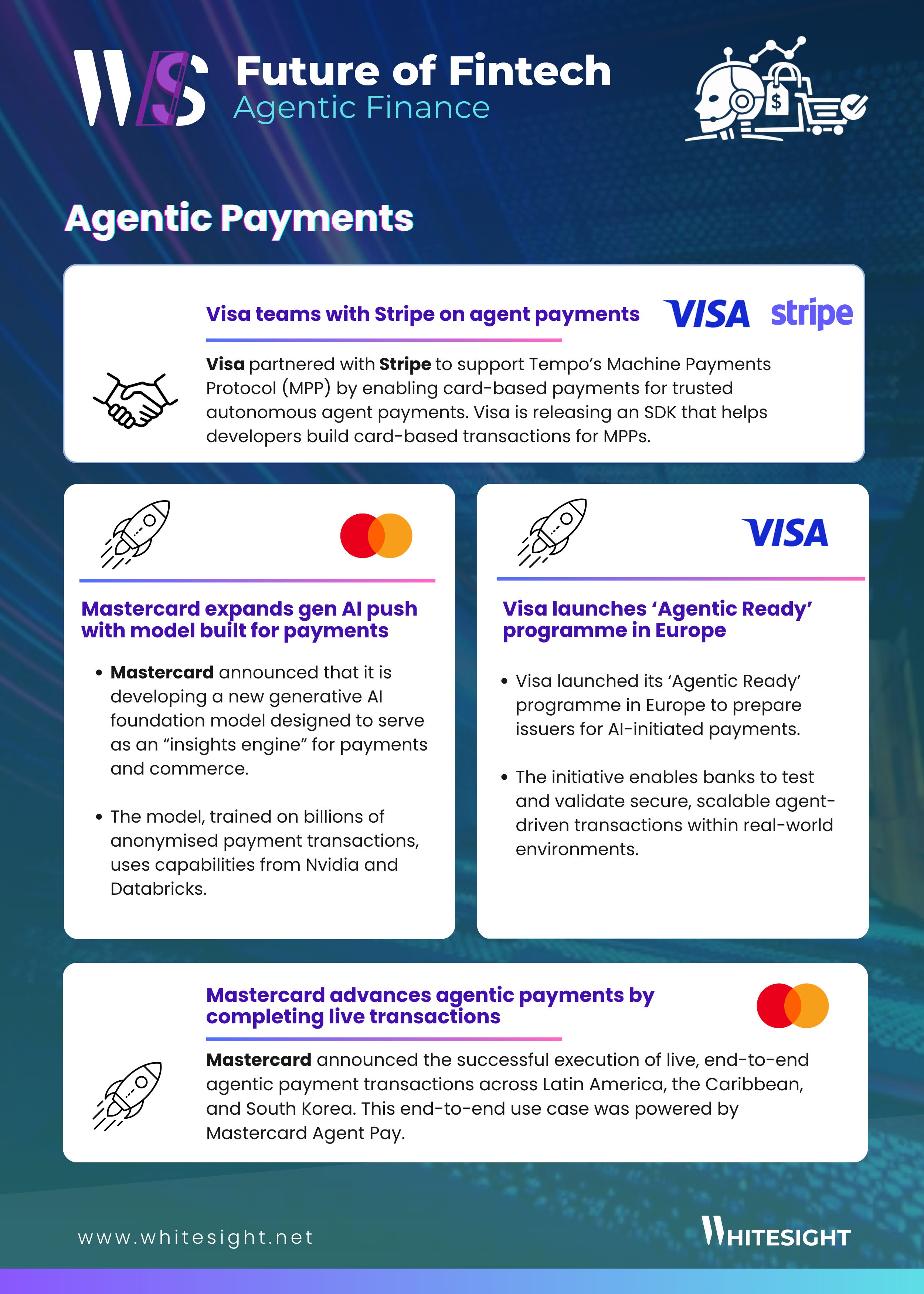
Mastercard executes live agentic payments across Latin America and the Caribbean
Mastercard completed end-to-end agentic transactions across Latin America, with AI agents initiating and completing real purchases.
Industry implications: This demonstrates agentic payments can operate securely at scale on existing rails, accelerating real-world adoption across multiple markets.
Mastercard completes Korea’s first live agentic transactions
Mastercard enabled South Korea’s first live agentic payments, validating AI-driven commerce within a regulated, high-tech payments ecosystem.
Industry implications: Expanding into advanced markets like Korea signals global standardisation of agentic payment frameworks across diverse regulatory environments.
Agentic crypto advanced as infrastructure players focused on securing autonomous execution and establishing trust in AI-driven transactions.
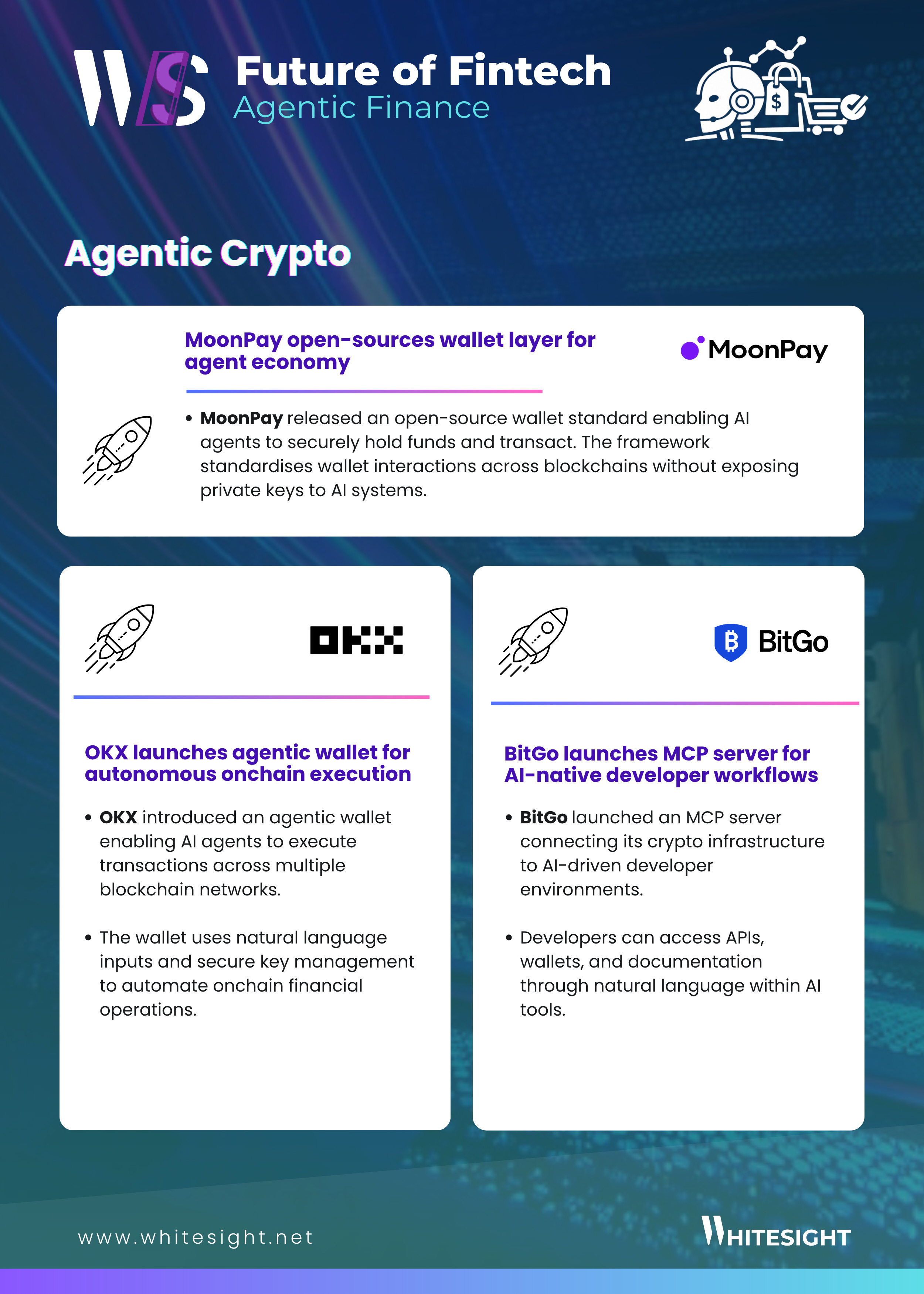
MoonPay integrates Ledger security into AI agents
MoonPay introduced Ledger-backed signing for AI agents, ensuring transactions are hardware-approved without exposing private keys.
Industry implications: Hardware-backed signing addresses core security risks, enabling safe delegation of trading and payments to autonomous agents.
World and Coinbase enable trusted AI shoppers
World and Coinbase launched a solution linking AI agents to verified human identities for trusted online transactions.
Industry implications: Combining identity verification with payments creates a trust layer, making AI agents acceptable participants in digital commerce.
Agentic commerce evolved as AI platforms enhanced product discovery and enabled agents to replicate real-world shopping behaviours.
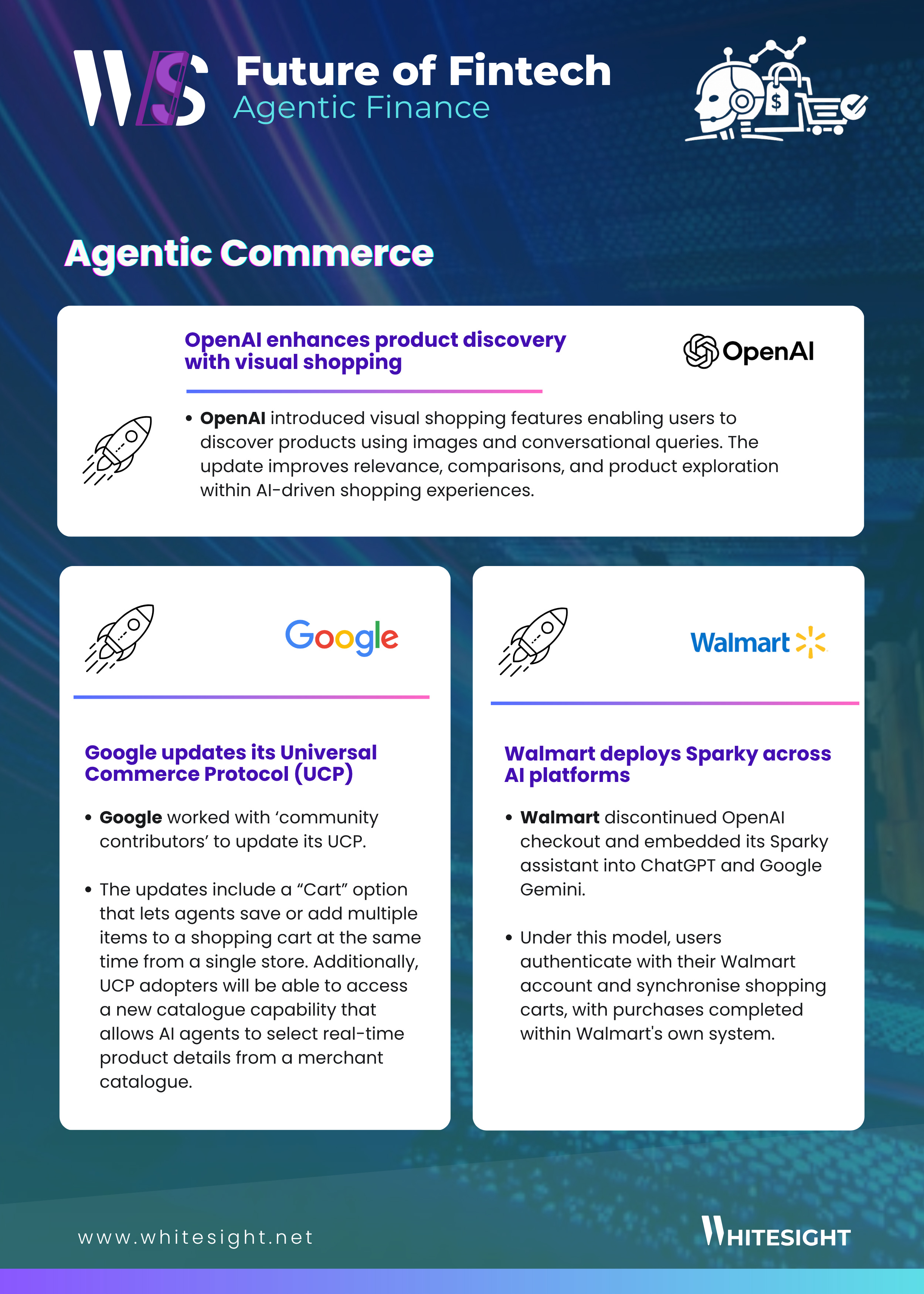
OpenAI enhances product discovery with visual shopping
OpenAI introduced visual shopping features that enable users to discover products through images in conversational interfaces.
Industry implications: Visual discovery strengthens AI’s role at the top of the funnel, improving relevance and accelerating intent-driven purchasing journeys.
Google enables AI agents to shop like humans
Google updated its commerce protocol, allowing AI agents to build carts and access real-time product catalogues.
Industry implications: Replicating human shopping behaviours positions AI agents as full-stack participants in commerce, from discovery to checkout execution.
Agentic banking evolved as financial institutions embedded AI into customer engagement and real-time money management workflows.
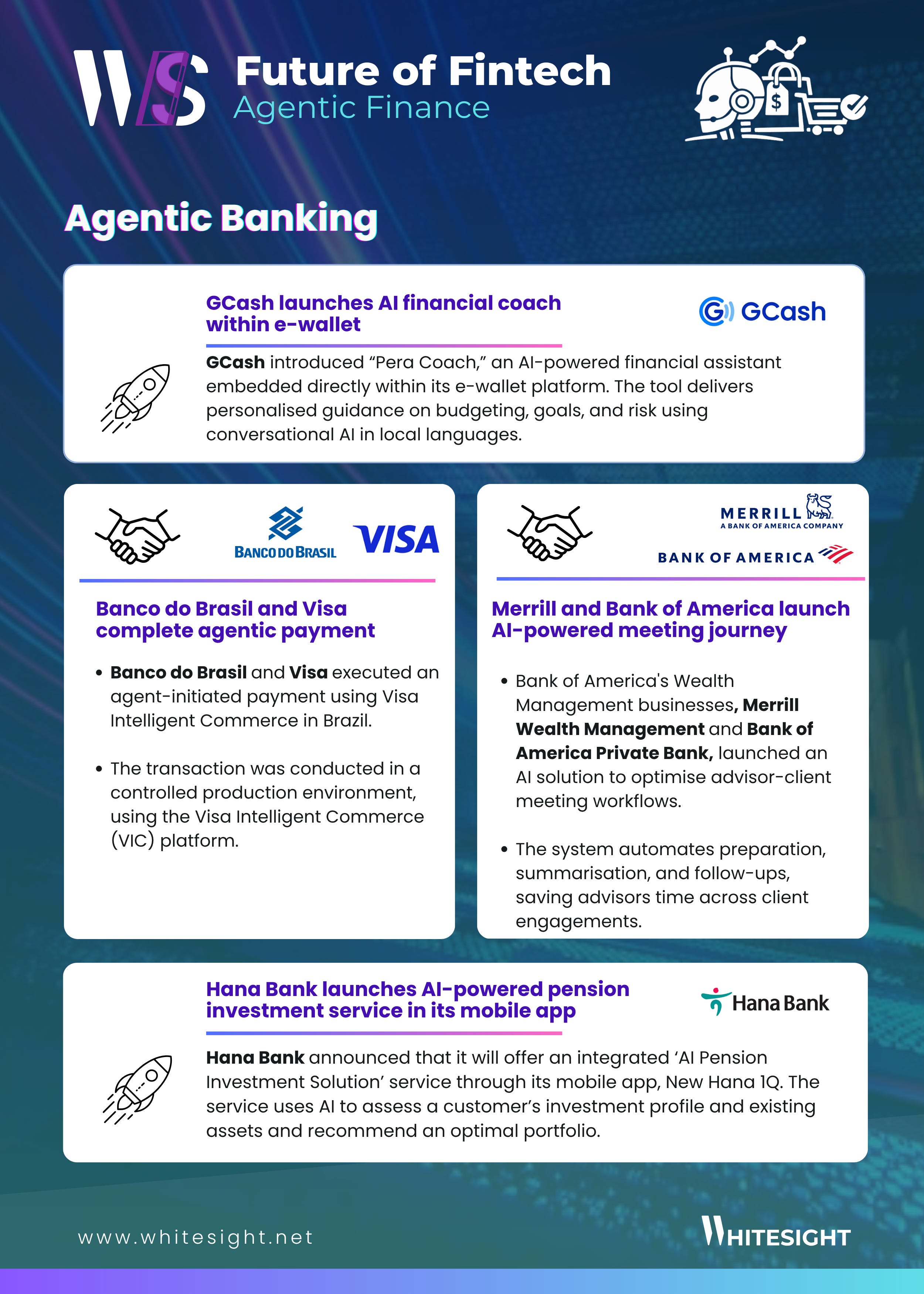
GCash launches AI financial coach within e-wallet
GCash introduced “Pera Coach,” an AI assistant delivering personalised financial guidance directly inside its e-wallet platform.
Industry implications: Embedding AI coaching into wallets signals a shift toward continuous, in-app financial guidance and behaviour-driven money management.
Vivi Money launches AI-native financial platform with Visa and Pismo
Vivi Money launched an AI-driven platform combining payments, savings, and real-time financial optimisation on regulated banking infrastructure.
Industry implications: AI-native platforms integrating analysis and execution indicate banking is evolving toward proactive, agent-led financial decisioning systems.
AI platforms evolved as providers strengthened developer ecosystems and reorganised enterprise AI stacks around agentic execution.
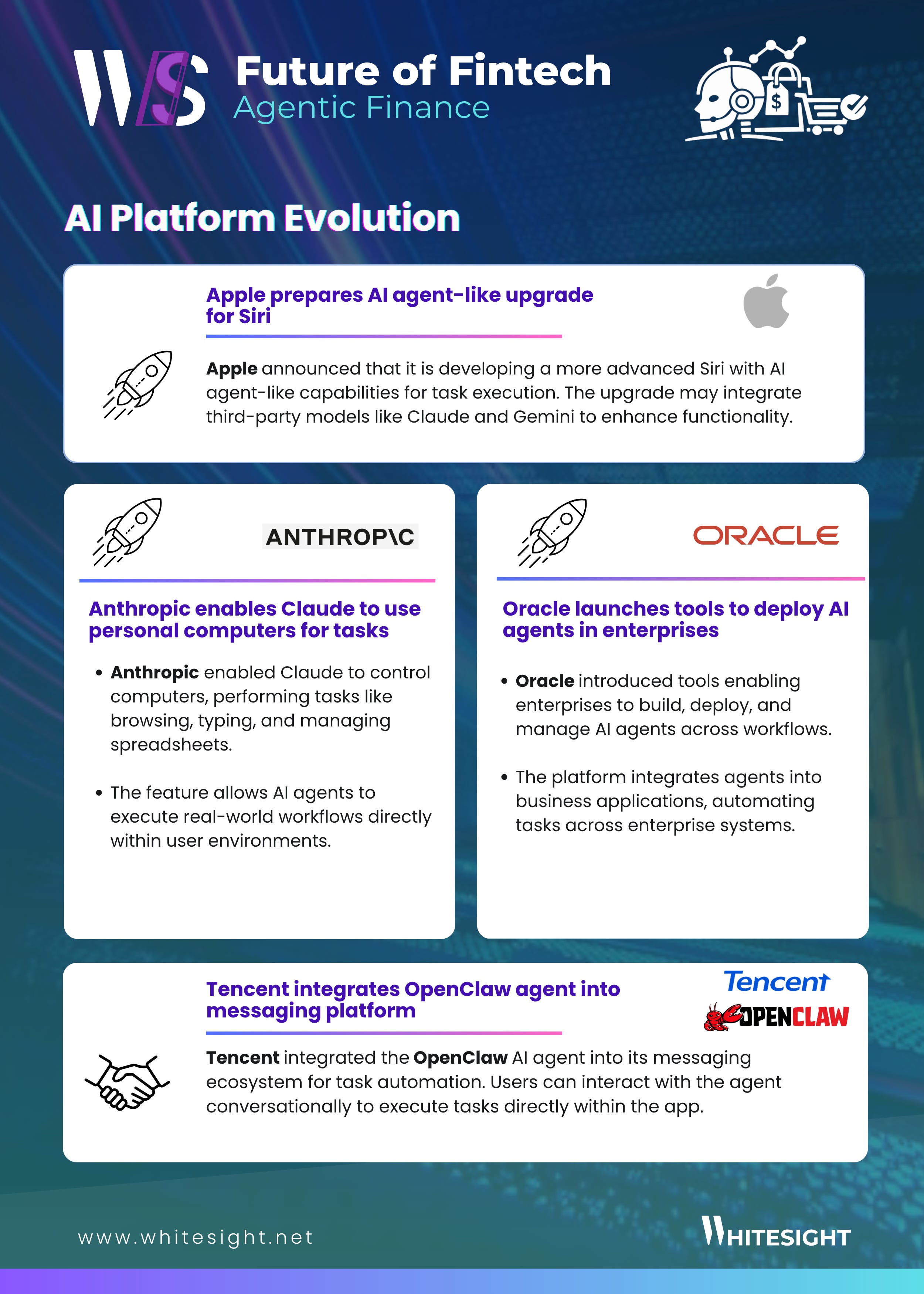
OpenAI acquires Astral to expand AI coding capabilities
OpenAI agreed to acquire Astral, integrating its Python developer tools into the Codex platform.
Industry implications: This signals a shift toward embedding AI agents directly into full software development workflows, beyond code generation.
Alibaba launches Wukong amid AI restructuring push
Alibaba introduced its Wukong AI platform while consolidating AI units under a new enterprise-focused structure.
Industry implications: Consolidating AI assets highlights a move toward unified, enterprise-grade agent platforms competing across global AI ecosystems.
Agentic infrastructure evolved as platforms introduced trust frameworks and workflow automation to support secure, AI-driven financial operations.
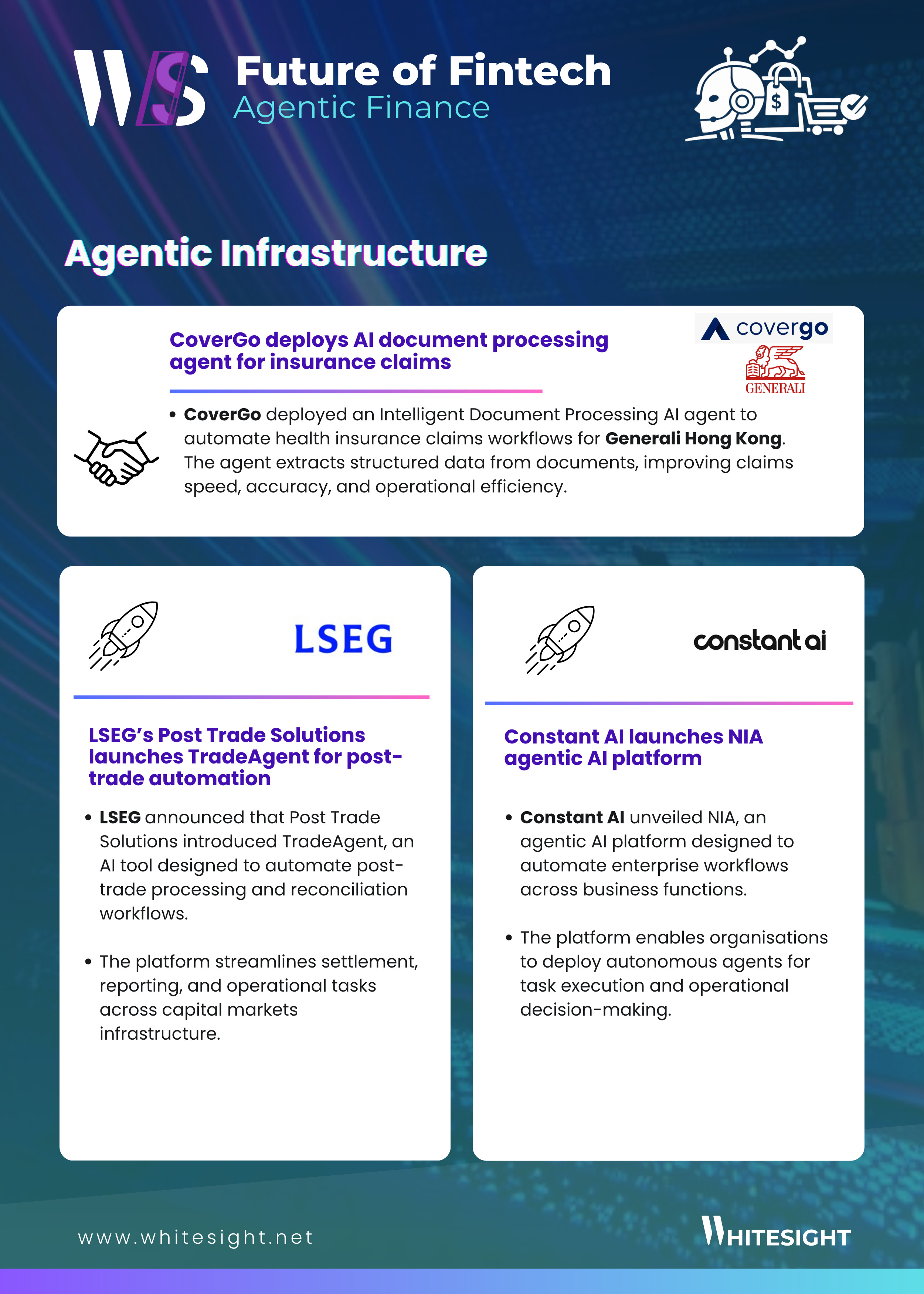
IXOPAY and Zip launch unified trust layer for agentic commerce
IXOPAY and Zip introduced an open framework to standardise identity, intent, and trust in AI-initiated transactions.
Industry implications: Establishing a shared trust layer signals a shift toward programmable identity and liability management in autonomous commerce ecosystems.
Zocks launches AI assistant for life insurance workflows
Zocks introduced an AI assistant helping insurance producers automate client interactions and accelerate policy issuance processes.
Industry implications: Automating advisory and underwriting workflows highlights how agentic systems are streamlining regulated financial services operations.
AI funding accelerated as capital flowed into both frontier model expansion and sovereign-scale infrastructure buildout.
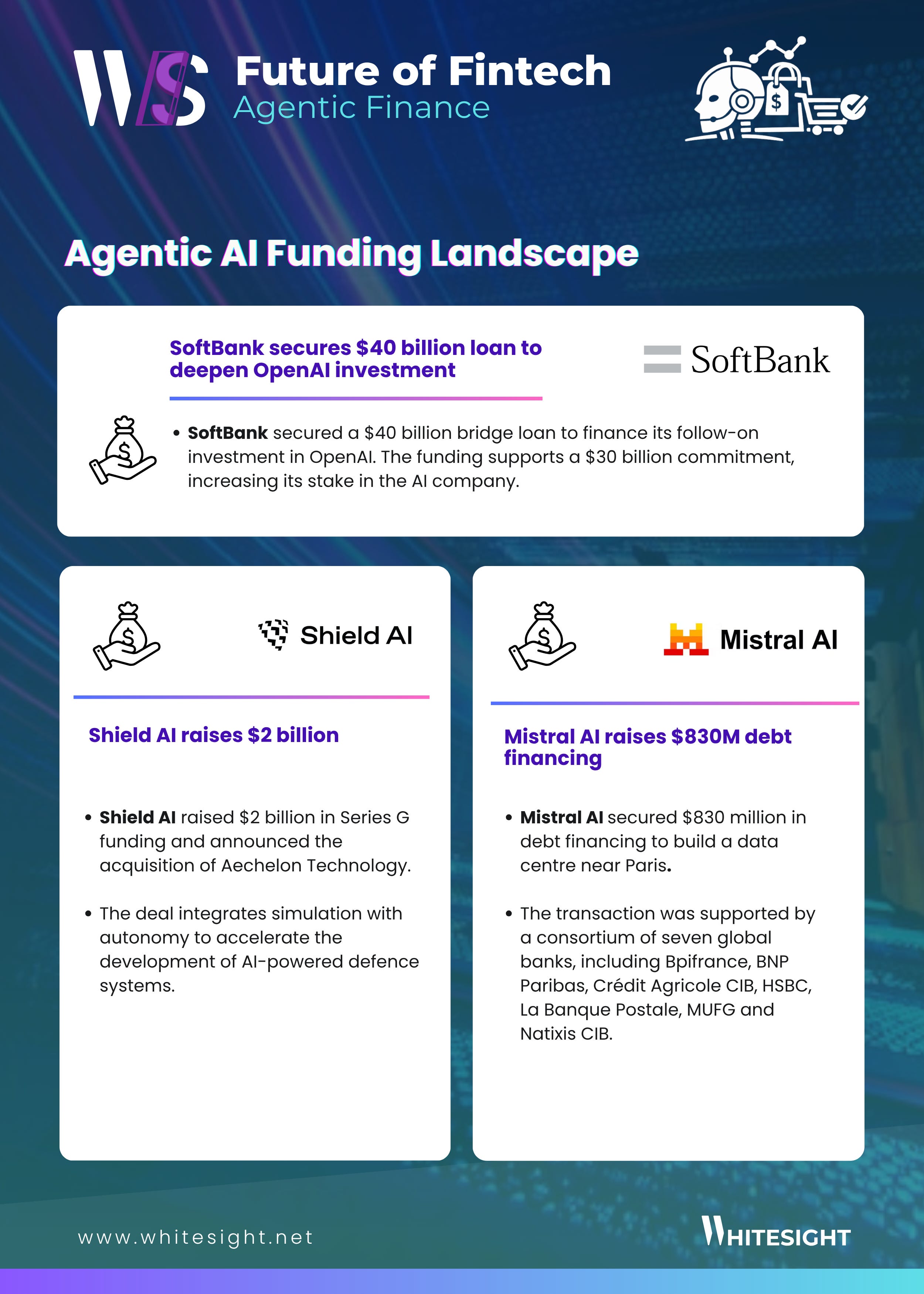
SoftBank secures $40 billion loan to deepen OpenAI investment
SoftBank signed a $40 billion bridge loan to fund a $30 billion follow-on investment in OpenAI.
Industry implications: This scale of leveraged capital signals intensifying competition to control foundational AI infrastructure and model ecosystems globally.
Mistral raises debt financing to build European AI infrastructure
Mistral secured $830 million in debt to build a large-scale AI data centre near Paris.
Industry implications: Sovereign AI infrastructure investments highlight Europe’s push to reduce dependence on US-dominated compute and cloud ecosystems.
And that’s a wrap 👋
We hope you enjoyed this edition of the Agentic Finance Brew!
As a reward for making it this far, here’s a curated set of agentic resources to keep your curiosity (and conviction) topped up. Cheers to continuous learning!
Link Up! –
Artificial intelligence readiness assessment report: India - UNESCO
The next frontier for UK investment platforms: Unlocking the AI advantage - BCG
The Race to Agentic AI: Why Infrastructure Will Make or Break Workforce Transformation - CISCO
If you’re someone who likes to read think pieces, you will likely love our monthly blog, Fintersections, where our team members analyse the convergence of fintech with the world.
And lastly, to stay updated on everything fintech and web3, follow us on LinkedIn and Twitter, and don’t be shy to show some ❤️
Thanks for reading Future of FinTech Newsletter! Subscribe for free to receive new posts and support my work.